
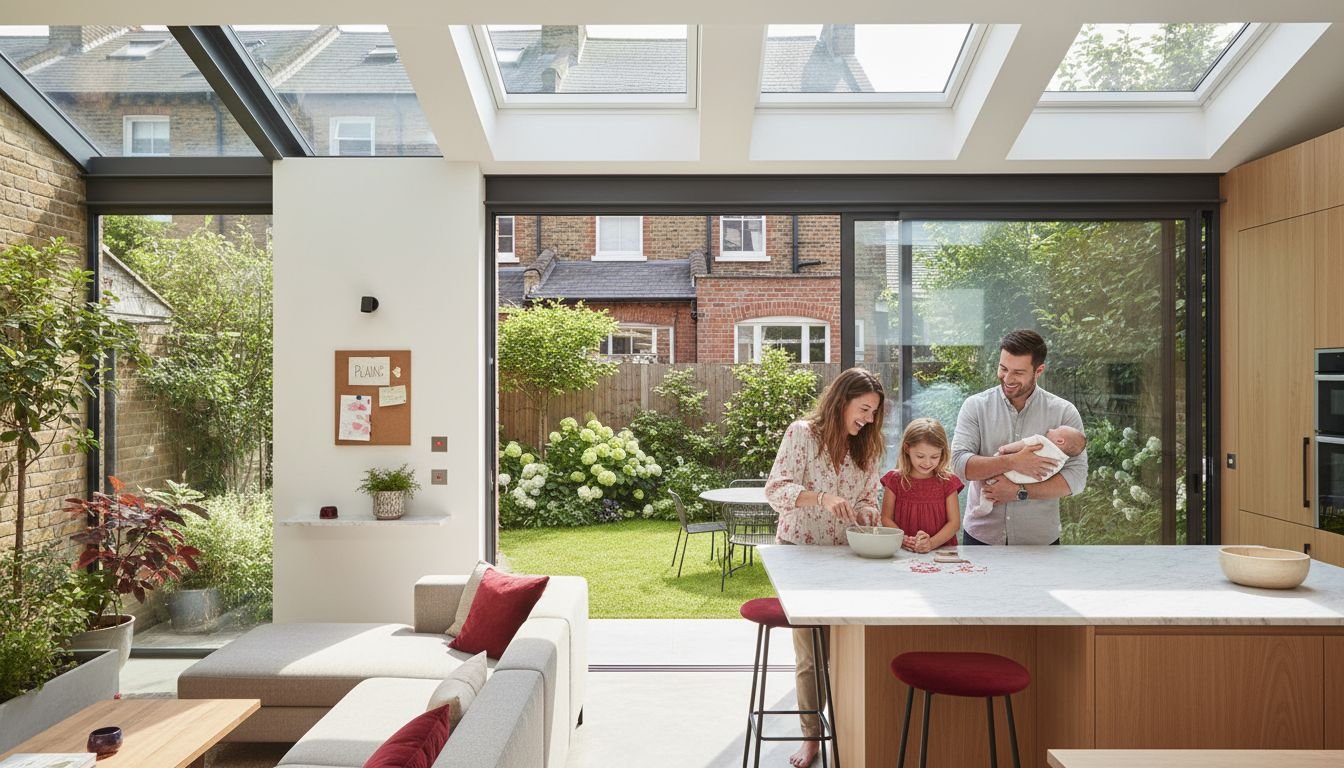
Over 60 percent of british homeowners believe that expanding their house is the best way to add space and value without moving. For families who love their neighbourhood but need more room, a rear extension can completely change how a home feels and functions. Understanding the options and key principles behind rear extensions helps people make confident choices that suit both lifestyle and long-term investment goals.
Table of Contents
- What Is a Rear Extension? Key Principles
- Types of Rear Extensions for London Homes
- Maximising Living Space and Functionality
- Impact on Property Value and Market Appeal
- Planning Permission, Regulations, and Compliance
- Costs, Budgeting, and Value for Money
Key Takeaways
| Point | Details |
|---|---|
| Definition of Rear Extension | A rear extension is a home improvement strategy that expands living space while preserving the original property’s integrity. |
| Types of Extensions | Common types include single-storey, double-storey, and wraparound extensions, each tailored to specific needs and spaces. |
| Impact on Property Value | Well-designed rear extensions can increase property value by 10-20% and enhance market appeal through improved living spaces. |
| Planning and Compliance | It’s essential to adhere to local planning regulations and property-specific guidelines to ensure successful implementation of extensions. |
What Is a Rear Extension? Key Principles
A rear extension represents a strategic home improvement technique allowing homeowners to expand their living space by constructing an additional structure at the back of their existing property. Unlike other home renovation approaches, rear extensions provide a direct method to increase usable square footage while maintaining the original home’s structural integrity.
Rear extensions typically involve carefully planned construction that respects the character of the surrounding area. According to local planning guidance, these extensions must be designed to be subordinate to the original building, which means they should not overwhelm or dominate the existing architectural structure. Homeowners must consider several critical principles when planning such a project:
- Maintaining proportional scale with the original property
- Ensuring minimal disruption to neighboring properties
- Adhering to local planning regulations
- Preserving the visual harmony of the streetscape
The technical specifications of a rear extension can vary significantly depending on specific architectural requirements. Single-storey extensions are most common, offering a balanced approach to increasing interior space without dramatically altering the home’s external appearance. These extensions often extend from the kitchen or living areas, creating seamless additional living environments that feel integrated with the existing floor plan. Professional architectural guidance becomes crucial in navigating the complex considerations of design, structural integrity, and planning permissions associated with such home improvement projects.
Types of Rear Extensions for London Homes
London homeowners have several distinctive rear extension styles to choose from, each offering unique spatial solutions and aesthetic possibilities. The most prevalent types are carefully designed to maximise living space while respecting the architectural character of the property and surrounding neighbourhood.
The primary rear extension categories include single-storey, double-storey, and wraparound extensions. Single-storey extensions represent the most common approach, typically extending from kitchen or living areas to create additional ground-level space. These extensions are particularly popular in terraced and semi-detached London homes, where space optimisation is crucial.
Key Types of Rear Extensions:
- Single-Storey Extensions
- Ideal for kitchen and living area expansions
- Lower construction complexity
- More affordable implementation
- Double-Storey Extensions
- Provides significant additional living and bedroom space
- Maximises vertical space potential
- Offers greater property value enhancement
- Wraparound Extensions
- Combines side and rear extension techniques
- Creates L-shaped additional living area
- Offers maximum floor space transformation
Each extension type requires careful planning, considering factors like natural light, structural integrity, and planning permission requirements. Professional architectural guidance ensures that the chosen extension not only meets the homeowner’s spatial needs but also complies with local building regulations and maintains the property’s aesthetic harmony.
Maximising Living Space and Functionality
Rear extensions offer homeowners a transformative approach to reimagining interior spaces, providing unprecedented opportunities to enhance both living functionality and property value. By strategically reconfiguring ground floor layouts, these extensions create seamless, interconnected living environments that adapt to modern lifestyle requirements.
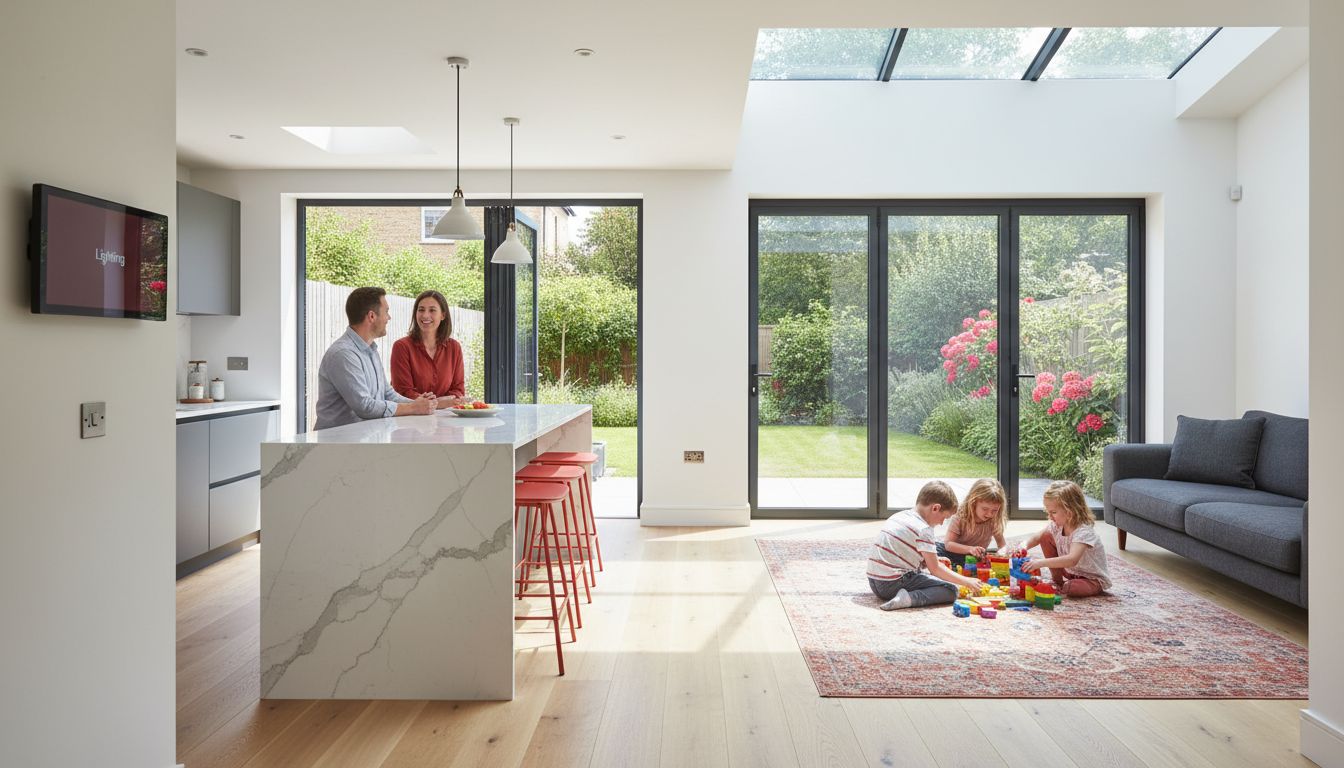
Innovative home configurations can dramatically improve spatial flow, allowing families to create multifunctional areas that serve multiple purposes. Homeowners can design extensions that incorporate practical additions like utility rooms, additional bathrooms, or open-plan kitchen-diners, effectively maximising every square metre of available space.
Key Functional Design Strategies:
- Open Plan Living
- Eliminates restrictive room divisions
- Creates flexible, adaptable spaces
- Enhances natural light penetration
- Multipurpose Zones
- Integrate work, leisure, and dining areas
- Maximise limited square footage
- Support contemporary lifestyle needs
- Smart Storage Solutions
- Built-in cabinetry and shelving
- Hidden storage mechanisms
- Reduce visual clutter
The true potential of a rear extension lies in its ability to transform how residents interact with their living spaces. By thoughtfully designing these areas, homeowners can create environments that are not just aesthetically pleasing but also incredibly functional, supporting everything from family gatherings to home working requirements with remarkable efficiency.
Impact on Property Value and Market Appeal
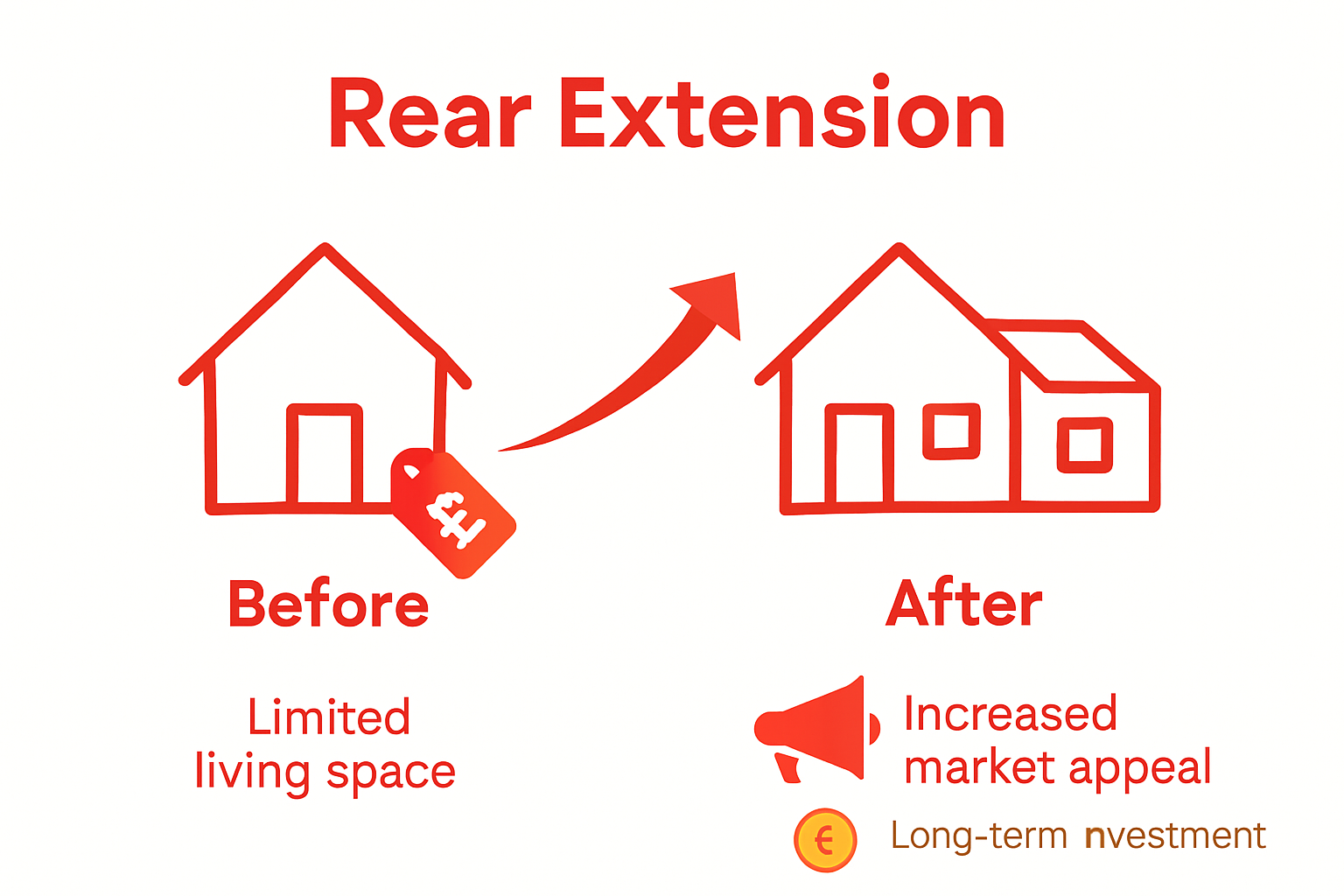
Rear extensions represent a strategic investment that can substantially elevate a property’s market value and attractiveness to potential buyers. Property valuation experts consistently demonstrate that well-designed extensions can generate significant financial returns, typically increasing home value by 10-20% depending on the quality and scale of the renovation.
Comprehensive market research reveals that modern buyers actively seek homes with flexible, intelligently designed living spaces. Extensions that create open-plan layouts, enhance natural light, and provide additional functional areas become powerful selling points, distinguishing a property in competitive London real estate markets.
Value-Adding Extension Characteristics:
- High-Quality Finish
- Professional craftsmanship
- Premium materials
- Seamless architectural integration
- Functional Design
- Maximised usable space
- Adaptable living areas
- Modern aesthetic appeal
- Energy Efficiency
- Superior insulation
- Enhanced thermal performance
- Reduced utility costs
Beyond immediate financial benefits, rear extensions offer long-term value by future-proofing homes. Thoughtful designs that anticipate changing lifestyle needs create adaptable spaces attractive to diverse buyer demographics, from young professionals to growing families seeking versatile living environments.
Planning Permission, Regulations, and Compliance
Navigating the complex landscape of planning permissions for rear extensions requires a nuanced understanding of local regulations and specific property characteristics. Homeowners must carefully assess their unique circumstances to ensure compliance with local authority guidelines and avoid potential legal complications.
Permitted development rights offer homeowners significant flexibility, with specific parameters that vary depending on property type and location. For instance, terraced and semi-detached homes can typically extend up to 3 metres in depth without full planning permission, while detached properties enjoy slightly more generous extension allowances.
Key Compliance Considerations:
- Property Type Restrictions
- Varying extension depth limits
- Different rules for terraced, semi-detached, and detached homes
- Location-specific regulatory variations
- Structural Compliance
- Maintain subordination to original building
- Respect architectural character
- Ensure minimal impact on neighboring properties
- Documentation Requirements
- Detailed architectural drawings
- Precise measurements
- Comprehensive site plans
Successful rear extensions demand meticulous attention to local planning regulations. Professional guidance becomes crucial in navigating these complex requirements, ensuring that homeowners can transform their living spaces while remaining fully compliant with local authority guidelines.
Costs, Budgeting, and Value for Money
Rear extensions represent a significant financial investment that requires strategic planning and comprehensive budgeting. Project costs can vary dramatically, typically ranging from £30,000 to £90,000 depending on the property’s location, extension size, and chosen design specifications.
Home extension budget planning demands careful consideration of multiple financial factors beyond basic construction expenses. Homeowners must account for design fees, planning permissions, material costs, labour charges, potential structural modifications, and unexpected contingencies that can quickly escalate overall project expenditure.
Key Budget Considerations:
- Direct Construction Costs
- Material expenses
- Labour charges
- Specialist trades work
- Indirect Expenses
- Architectural design fees
- Planning permission applications
- Structural engineering assessments
- Long-Term Financial Implications
- Potential property value increase
- Energy efficiency improvements
- Enhanced living space functionality
Successful rear extension projects balance immediate financial investment with long-term value generation. Intelligent budgeting involves not just minimising upfront costs, but strategically investing in quality design and construction that delivers sustainable returns through improved property valuation and enhanced living experiences.
Transform Your Home with Expertly Designed Rear Extensions
If you have been considering a rear extension to maximise your living space, improve your home’s functionality and boost its market value you have already faced the challenge of navigating complex planning permissions and design decisions. At Reltic Extend we understand the importance of maintaining the architectural harmony of your property while creating stylish and practical spaces tailored to your lifestyle. Our expertise spans single-storey, double-storey, and wraparound rear extensions which allow you to enjoy open-plan living, clever storage solutions and natural light in every room.
Explore our Types of Home Extensions & Ideas to find the perfect fit for your property and check out our Design & Build Tips for Home Extensions to ensure you achieve the best value and compliance with local regulations. Do not wait to enhance your home with a professionally managed extension that comes with over 20 years experience and a 10-year structural warranty. Contact our team today for a personalised consultation and start transforming your home with confidence.
Frequently Asked Questions
What are the main benefits of a rear extension?
Rear extensions provide significant advantages, including increased living space, improved property value by 10-20%, and enhanced functionality through cleverly designed layouts.
How does a rear extension impact my property’s value?
A well-designed rear extension can substantially increase a property’s market appeal and value, often generating a return on investment of 10-20%, depending on the quality and scale of the renovation.
What types of rear extensions are available?
The main types of rear extensions include single-storey, double-storey, and wraparound extensions, each offering unique benefits like maximising space and improving living functionality.
Do I need planning permission for a rear extension?
In many cases, planning permission is not required due to permitted development rights, but homeowners should verify local regulations, as requirements can vary based on property type and location.