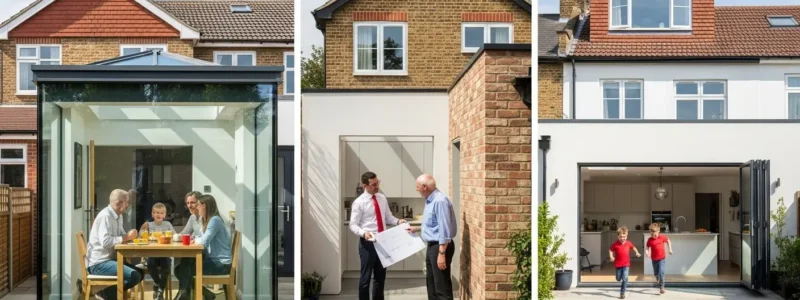

Over 200,000 planning applications for home extensions are submitted each year in the UK, showing how many homeowners want more space without moving. Facing rising property prices and growing families, many are looking for practical ways to expand their living area. Learning about rear extensions helps you discover flexible options for modernising your home while potentially adding significant value and comfort for years to come.
Table of Contents
- Defining Rear Extensions For UK Homes
- Common Types And Design Variations
- Planning Permission And Building Regulations
- Cost Breakdown And Project Timelines
- Benefits And Potential Drawbacks Explained
- Comparing Rear Extensions Vs. Alternatives
Key Takeaways
| Point | Details |
|---|---|
| Consider Strategic Value | Rear extensions enhance living space and can significantly increase property value, making them a cost-effective alternative to moving. |
| Understand Planning Requirements | Homeowners should familiarize themselves with planning permission and building regulations to avoid complications during the extension process. |
| Evaluate Extension Types | Choose an extension type (single-storey, double-storey, or wraparound) based on specific needs, budget, and the potential impact on outdoor space. |
| Compare Alternatives | Assess other expansion options like loft or garage conversions to find the best solution based on property characteristics and personal preferences. |
Defining Rear Extensions for UK Homes
A rear extension is a strategic home improvement project that involves constructing an additional living space at the back of your existing property. According to legacy.tendringdc.gov.uk, these extensions can encompass various structures including conservatories, single-storey additions, and two-storey expansions, all designed to increase your home’s available living area.
Typically, rear extensions transform underutilised outdoor spaces into functional interior rooms, providing homeowners with flexible solutions for growing families or changing lifestyle needs. These architectural modifications can range from compact kitchen expansions to substantial living area enlargements, offering a practical alternative to costly house relocations.
The key characteristics of rear extensions include:
- Direct connection to the existing property’s rear wall
- Designed to maximise natural light and outdoor views
- Potential to significantly increase property value
- Adaptable to various architectural styles and home configurations
Homeowners considering a rear extension should understand that these projects require careful planning and potential understanding of local planning guidelines. Each extension is unique, tailored to individual property characteristics, structural limitations, and specific homeowner requirements. Professional consultation can help navigate the complexities of design, permissions, and construction to ensure a successful home improvement project.
Common Types and Design Variations
Rear extensions offer diverse architectural solutions tailored to different homeowner needs and property configurations. Legacy.tendringdc.gov.uk highlights three primary extension types: conservatories, single-storey structures, and two-storey additions, each presenting unique design possibilities and considerations for property enhancement.
The most common rear extension variations include:
- Single-Storey Extensions: Ground-level additions perfect for expanding kitchen, dining, or living spaces
- Double-Storey Extensions: Comprehensive additions creating extra rooms on both ground and first floor levels
- Wraparound Extensions: L-shaped designs that simultaneously extend along the rear and side of a property
- Kitchen Extensions: Specialized additions focusing on creating modern, open-plan cooking and dining areas
Each extension type requires careful evaluation of structural implications, planning permissions, and potential impact on neighboring properties. Factors such as building regulations, natural light access, and architectural harmony with the existing structure play crucial roles in determining the most suitable design approach.
Homeowners should consider their specific requirements when selecting an extension type. Factors like budget, available outdoor space, desired functionality, and long-term property value should guide the decision-making process.
IMAGE:descriptive_key_1] Consulting with [professional extension design experts can provide tailored insights into which extension variation best suits individual property characteristics and lifestyle needs.
Planning Permission and Building Regulations
Navigating the legal landscape of home extensions requires a comprehensive understanding of planning permission and building regulations. Homebuilding.co.uk emphasizes that building control approval is a legal requirement for most extension projects, ensuring compliance with critical safety, energy efficiency, and structural integrity standards.
Key considerations for planning permission and building regulations include:
- Determining whether your proposed extension falls under permitted development rights
- Understanding size limitations for extensions without formal planning permission
- Assessing the potential impact on neighboring properties
- Ensuring compliance with local authority building requirements
Most rear extensions require careful evaluation of specific criteria. Typically, homeowners can proceed without full planning permission if their extension meets certain conditions, such as:
- Staying within prescribed size limits
- Not exceeding maximum height restrictions
- Using materials similar to the existing property
- Maintaining a specific distance from property boundaries
To ensure a smooth process, homeowners should consult the comprehensive planning permission requirements guide early in their project planning. Professional guidance can help navigate the complexities of local regulations, potentially saving time and avoiding costly mistakes. Each local authority may have slightly different interpretations of building regulations, making expert consultation crucial for successful extension projects.
Cost Breakdown and Project Timelines
Undertaking a rear extension involves careful financial planning and understanding potential expenses. Homebuilding.co.uk indicates that basic single-storey extensions typically range from £1,500 to £2,500 per square metre, with costs varying significantly based on design complexity, materials, and labour requirements.
A comprehensive cost breakdown typically includes:
- Construction Costs: Primary expenses for building work
- Architectural Fees: Professional design and planning expenses
- Legal and Regulatory Expenses: Planning permission and building regulation applications
- Structural Engineering Fees: Technical assessments and structural calculations
Icon Surveyors highlights additional expenses that homeowners often overlook, such as:
- Architectural design fees
- Planning permission application costs
- Building regulations application fees
- Structural engineer consultation charges
- Interior finishing and fitting expenses
Project timelines for rear extensions can typically range from 12 to 20 weeks, depending on complexity, size, and potential unforeseen challenges. Factors influencing duration include design approval, construction complexity, material availability, and local authority processing times. Homeowners should consult detailed planning guides to establish realistic expectations and prepare for potential variations in both budget and project completion timeframes.
Benefits and Potential Drawbacks Explained
Assets.publishing.service.gov.uk highlights that extending permitted development rights for rear extensions aims to reduce costs and uncertainty for homeowners, potentially increasing property value and living space. These extensions represent a strategic approach to home improvement that can transform your living environment without the need for relocation.
Key benefits of rear extensions include:
- Increased Living Space: Adding functional areas to your home
- Property Value Enhancement: Potential significant market value increase
- Customization Opportunities: Tailoring spaces to specific lifestyle needs
- Cost-Effective Alternative to Moving: Avoiding expensive relocation expenses
Legacy.tendringdc.gov.uk warns that while rear extensions offer numerous advantages, they must be carefully designed to avoid negative impacts on residential amenity. Potential drawbacks homeowners should consider include:
- Potential loss of garden space
- Possible disruption to neighbouring properties
- Significant upfront investment
- Complex planning and regulatory requirements
- Potential temporary lifestyle disruption during construction
To mitigate potential challenges, homeowners should consult comprehensive planning guidelines and engage professional design experts. Carefully weighing the benefits against potential drawbacks ensures a successful extension project that enhances both living space and property value.
Comparing Rear Extensions vs. Alternatives
Homebuilding.co.uk highlights that rear extensions represent just one of several options for homeowners seeking to expand their living space. Each home improvement strategy comes with unique considerations, making it crucial to evaluate alternatives based on individual property characteristics and budget constraints.
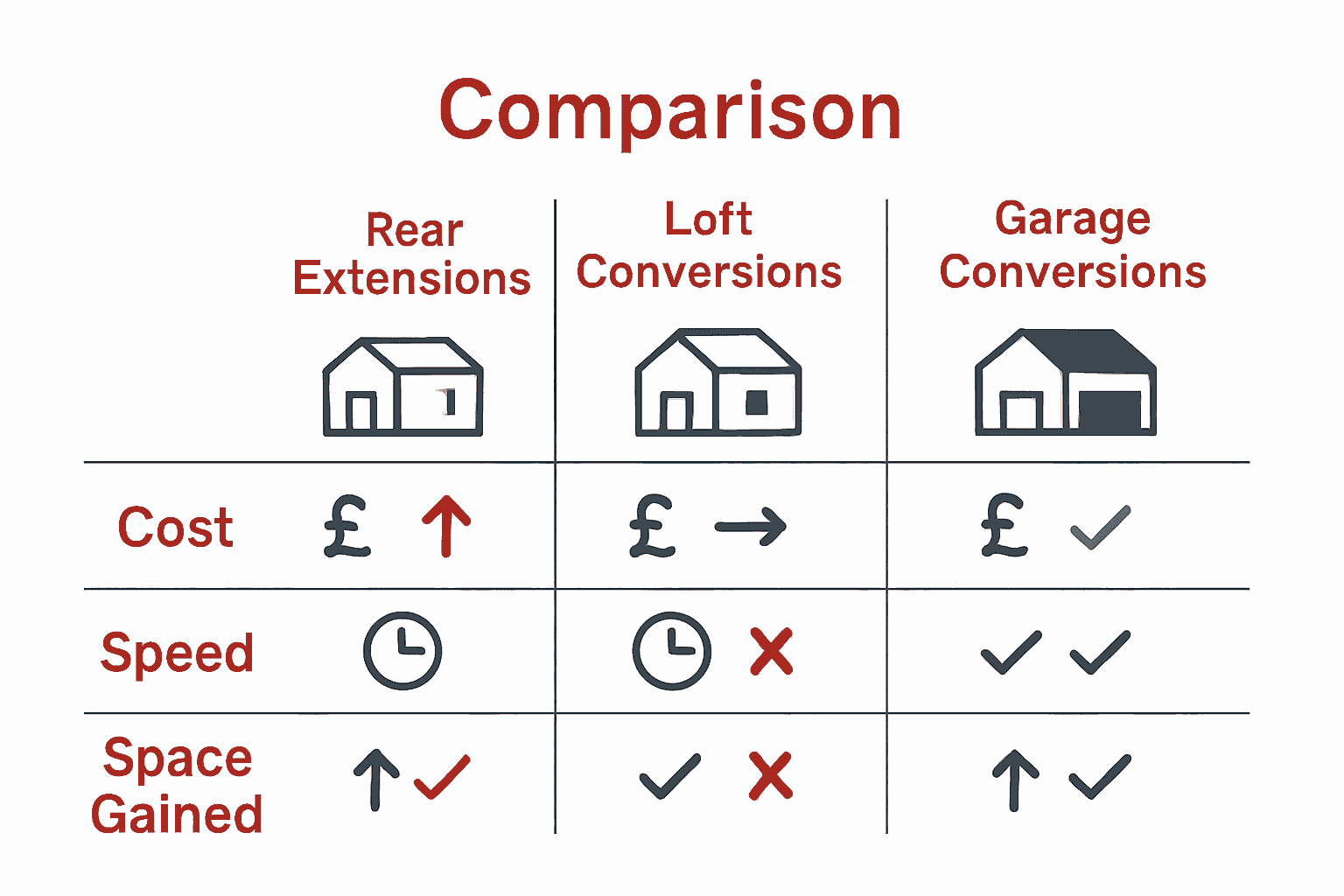
Comparative analysis of home expansion alternatives reveals distinct advantages and limitations:
Rear Extension
- Maximum design flexibility
- Direct connection to existing structure
- Potential for significant space increase
- Higher construction complexity
Loft Conversion
- Often more cost-effective
- Minimal garden space reduction
- Quicker implementation
- Limited by roof structure
Garage Conversion
- Lower initial investment
- Faster completion timeline
- Utilizes existing structure
- Reduced external storage options
The most suitable option depends on several critical factors:
- Available budget
- Property configuration
- Desired additional living space
- Long-term property value considerations
- Potential disruption during construction
Homeowners should carefully assess their specific requirements and explore comprehensive extension alternatives before committing to a single approach. Professional consultation can provide tailored insights into which expansion method best matches individual home improvement goals and financial parameters.
Transform Your Home with Expert Rear Extensions
If you are searching for ways to increase your living space while enhancing your property’s value without the hassle of moving, a rear extension is a perfect solution. This guide explains the key challenges like navigating planning permissions, managing construction costs, and ensuring designs blend seamlessly with your home. At Reltic Extend, we understand these concerns and specialise in creating bespoke rear extensions tailored to your lifestyle and property characteristics.
Ready to take the next step in your home improvement journey Explore our Types of Home Extensions & Ideas to find inspiration and practical options that suit your needs. Need help with the complex planning process Discover our Planning & Permissions for Home Extensions guides and expert advice that take the stress out of approvals. Don’t wait to create the space you deserve Contact us today at https://relticextend.co.uk/contact-us and benefit from over 20 years of trusted experience, transparent pricing, and a guaranteed quality that lasts. Start your dream extension now and enjoy a home that truly reflects you.
Frequently Asked Questions
What is a rear extension?
A rear extension is an architectural project that involves adding additional living space to the back of an existing property, typically connecting directly to the existing rear wall.
What types of rear extensions are common?
Common types of rear extensions include single-storey extensions, double-storey extensions, wraparound extensions, and kitchen extensions, each tailored to specific homeowner needs and property configurations.
Do I need planning permission for a rear extension?
Most rear extensions require planning permission and must comply with building regulations. However, some may fall under permitted development rights, allowing them to proceed without formal permission if they meet specific criteria.
What are the main benefits of adding a rear extension to my home?
Key benefits of rear extensions include increased living space, potential enhancement of property value, customization opportunities for tailored design, and a cost-effective alternative to moving house.