

Adding space to your London home remains a popular choice for thousands of city homeowners. With property prices rising and limited room to move, many families are choosing home extensions as a smart alternative. A well-planned extension can boost your property value by up to 20 percent, all while improving day-to-day comfort. This guide reveals what makes extensions in London unique, offers practical advice for success, and helps you see the true value of investing in your current space.
Table of Contents
- Understanding Home Extensions in London
- Popular Extension Types and Their Benefits
- Planning Permissions and Legal Requirements
- Cost Factors and Budget Considerations
- Comparing Home Extension Versus Moving
Key Takeaways
| Point | Details |
|---|---|
| Home Extensions Increase Property Value | Well-designed extensions can add 10-20% to a property’s market worth, making it a strategic investment. |
| Understanding Planning Regulations is Crucial | Homeowners must navigate planning permissions and building regulations to ensure compliance and avoid legal issues. |
| Cost Management is Essential | Budgeting should include construction costs, professional fees, and a contingency fund to cover unexpected expenses. |
| Extensions Offer Lifestyle Flexibility | They provide a solution to expanding living space without the disruption of moving, allowing families to stay in established neighborhoods. |
Understanding Home Extensions in London
Extending your home in London is more than a renovation project – it’s a strategic investment in your property’s value and living space. As the HomeOwners Alliance advises, home extensions represent a smart approach for homeowners seeking to maximize their existing property without the complexities of moving.
Home extensions in London offer multiple benefits beyond simple square footage expansion. Property value enhancement is a primary motivation, with well-designed extensions potentially increasing a home’s market worth by 10-20%. According to RICS, professional extension planning can transform underutilised spaces into functional, modern living areas that adapt to changing family needs.
The London property landscape presents unique challenges and opportunities for home extensions. Factors like limited urban space, strict planning regulations, and diverse architectural styles mean homeowners must approach extensions strategically. Key considerations include:
- Structural feasibility and building regulations compliance
- Maximizing natural light and maintaining architectural harmony
- Understanding permitted development rights
- Budgeting for quality materials and professional design services
Successful home extensions require careful planning and professional guidance. Understanding Why Home Extensions in London Matter provides deeper insights into navigating this complex but rewarding home improvement journey. Working with experienced local professionals who understand London’s specific architectural and regulatory environment will help transform your extension vision into a reality.
Popular Extension Types and Their Benefits
London homeowners have several strategic extension options to transform their living spaces, each offering unique advantages. RICS highlights the diverse range of home extension possibilities that can dramatically enhance property functionality and value.
Rear Extensions represent one of the most popular home improvement strategies in urban London. These extensions typically create open-plan kitchen-dining areas, seamlessly connecting indoor and outdoor spaces. By extending into garden areas, homeowners can add significant square footage while creating bright, modern living environments that maximise natural light and improve overall home flow.
Loft Conversions offer another compelling option for London properties. As recommended by Understanding Types of Home Extensions, these extensions can transform unused attic spaces into functional bedrooms, home offices, or recreational areas. Key benefits include:
- Minimal disruption to existing living spaces
- Potential for adding 20-30% additional floor area
- Increased property value without expanding property footprint
- Cost-effective compared to full ground-level extensions
Side Return Extensions are particularly valuable for terraced and narrow London homes. By expanding into the typically underutilised side alleyway, homeowners can create wider, more spacious ground floor layouts. These extensions often provide opportunities for improved natural lighting, more open-plan living configurations, and enhanced kitchen designs that integrate seamlessly with garden spaces.
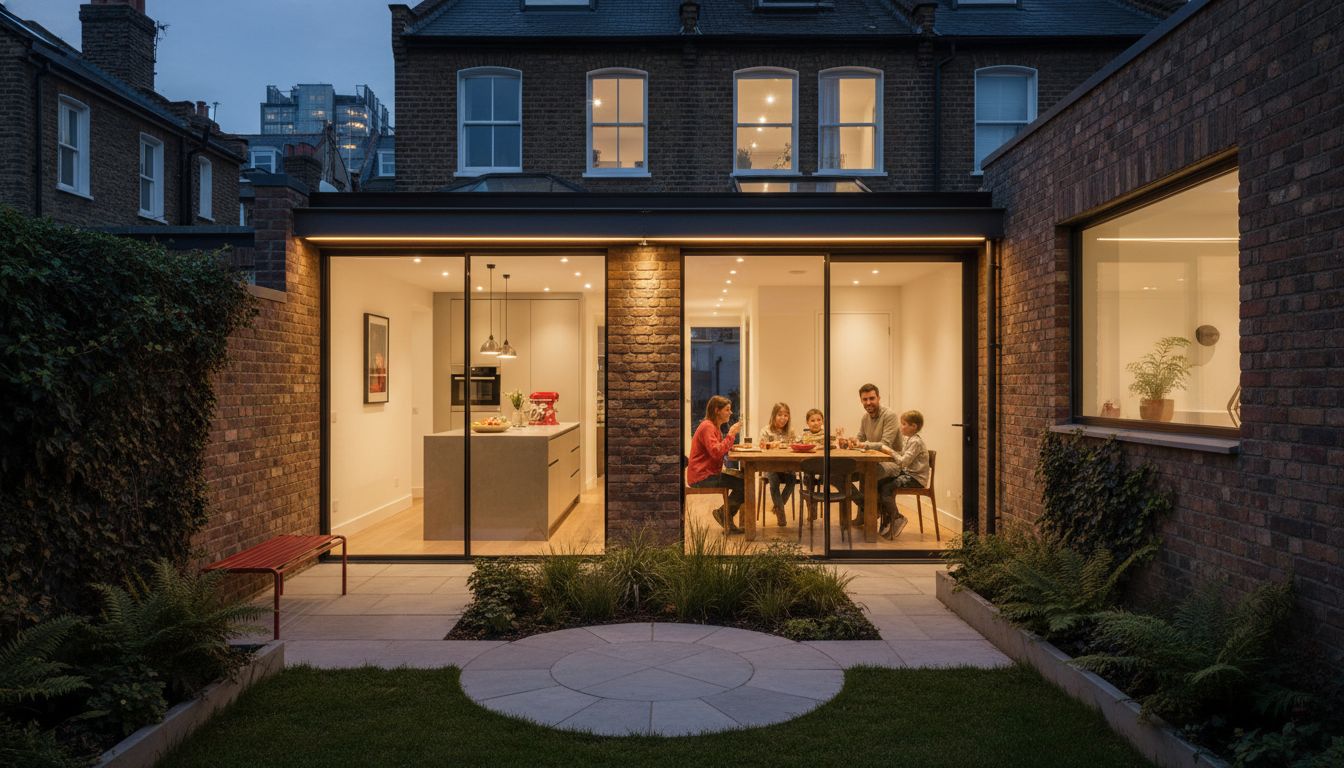
Whether considering a rear, loft, or side return extension, London homeowners must carefully evaluate their specific property characteristics, budget constraints, and long-term lifestyle needs. Professional consultation and thorough planning remain crucial to executing a successful home extension project that adds genuine value and functionality.
Planning Permissions and Legal Requirements
Navigating the complex landscape of planning permissions is crucial for London homeowners considering home extensions. RICS emphasizes that understanding legal requirements is fundamental to successfully executing any home improvement project without risking potential enforcement actions.
Permitted Development Rights offer homeowners significant flexibility in extending their properties without full planning permission. These rights allow certain types of extensions, subject to specific limitations. Key considerations include:
- Maximum extension depth for rear additions
- Height restrictions for single and double-storey extensions
- Total area coverage limitations
- Distance from property boundaries
Planning Permission for Extensions highlights that not all extensions require formal planning approval. However, homeowners must carefully assess their specific circumstances, as exceptions and local borough regulations can significantly impact project feasibility.
Building regulations represent another critical legal requirement for home extensions in London. These regulations ensure structural integrity, safety, and compliance with national building standards. Typical areas of regulatory focus include:
- Structural stability and load-bearing calculations
- Thermal efficiency and insulation requirements
- Fire safety provisions
- Electrical and plumbing system standards
- Accessibility considerations
Successful navigation of planning permissions demands meticulous attention to detail and often professional guidance. London’s diverse architectural landscape and stringent local planning policies mean that what works in one borough might be restricted in another. Consulting with local planning authorities and experienced extension professionals can help homeowners avoid potential legal complications and ensure a smooth, compliant home improvement process.
Cost Factors and Budget Considerations
RICS emphasizes that understanding comprehensive budget considerations is crucial for successful home extensions in London. Homeowners must approach financial planning strategically, recognizing that extension costs extend far beyond basic construction expenses.
Construction Costs represent the most significant financial investment in any home extension project. Typical price ranges for London extensions vary dramatically based on extension type and complexity:
- Rear Extensions: £1,500 – £2,500 per square metre
- Loft Conversions: £20,000 – £60,000 total project cost
- Side Return Extensions: £2,000 – £3,000 per square metre
- Double-Storey Extensions: £2,500 – £3,500 per square metre
Beyond direct construction expenses, homeowners must budget for several additional critical financial considerations. Professional fees including architectural design, structural engineering, and planning permission applications can represent 10-15% of total project costs. Unexpected expenses such as structural reinforcements, utility redirections, or historical property complications can quickly escalate budgets.
The financial strategy for home extensions should incorporate multiple protective measures. The Essential Guide to Profitable Home Extensions recommends establishing a contingency fund of 10-20% above initial cost estimates to manage potential unexpected expenses. This approach provides financial flexibility and reduces stress during the extension process.
Ultimately, successful budget management requires thorough research, detailed professional consultation, and realistic expectations. London’s complex property landscape demands a nuanced approach to financial planning, where careful consideration of materials, labour costs, legal requirements, and potential property value increase can transform an extension from a mere renovation into a strategic long-term investment.
Comparing Home Extension Versus Moving
HomeOwners Alliance highlights the critical decision facing London homeowners: whether to extend their current property or invest in an entirely new home. This complex choice involves multiple financial, emotional, and practical considerations that extend far beyond simple cost comparisons.
Financial Implications often make home extensions more attractive than moving. Typical costs associated with relocation include:
- Estate agent fees (1.5-3% of property value)
- Solicitor charges
- Stamp duty (potentially £10,000-£30,000 for London properties)
- Moving expenses
- Potential renovation costs in a new property
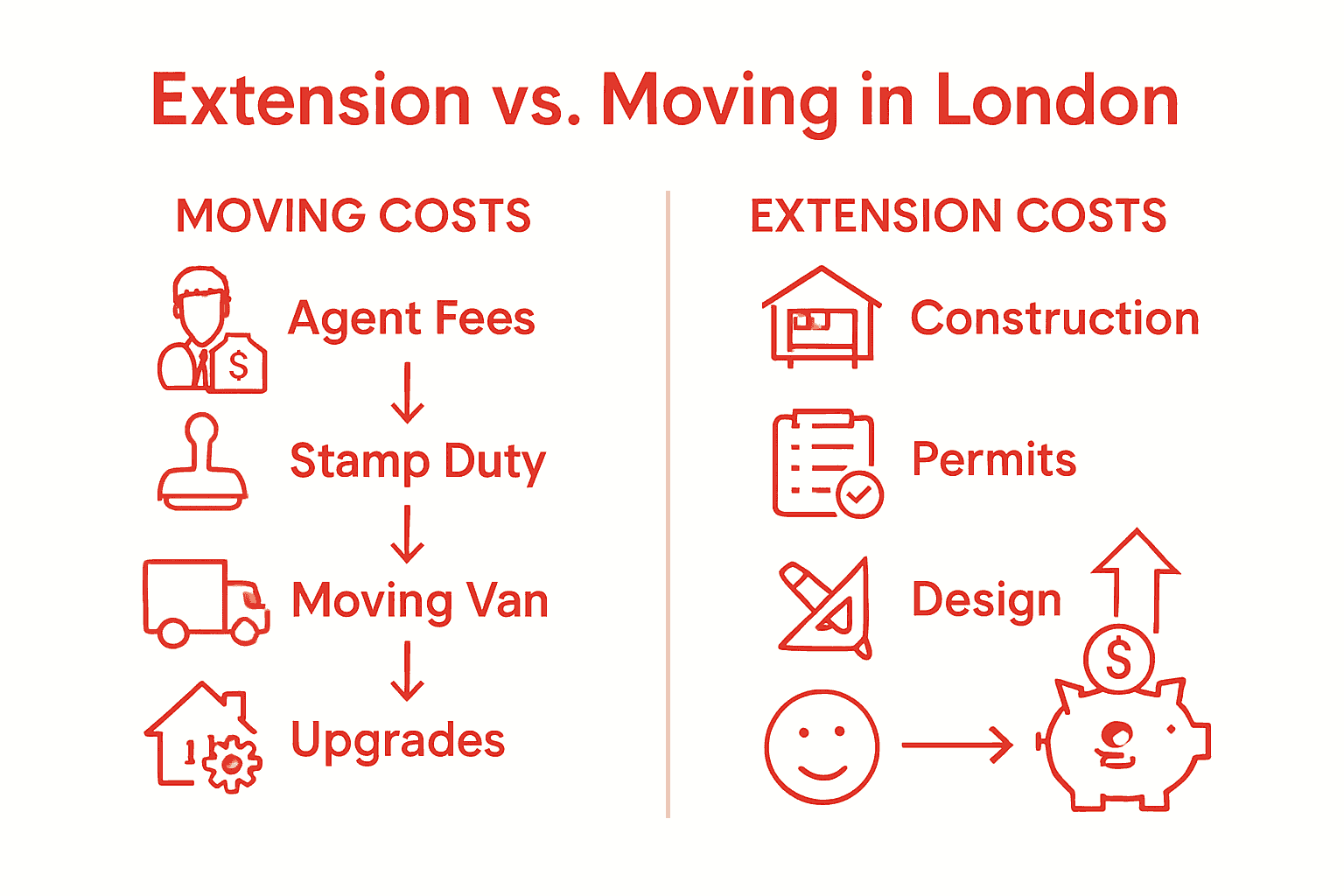
In contrast, Extending Your Home is Cheaper Than Moving demonstrates that home extensions can often be completed for significantly less than the total expenses of relocating, while simultaneously increasing your existing property’s market value.
Emotional and Practical Considerations play a substantial role in this decision. Moving disrupts established community connections, school arrangements, and familiar neighbourhood networks. Home extensions allow families to transform their current space without the emotional and logistical challenges of relocation. RICS emphasizes that professional extension planning can create bespoke living environments that precisely match homeowners’ evolving lifestyle needs.
Ultimately, the decision between extending and moving depends on individual circumstances. Factors such as property location, potential for expansion, local market conditions, and personal attachment to the current home all contribute to making this nuanced choice. Careful evaluation of long-term financial implications, lifestyle requirements, and potential property value appreciation will guide homeowners toward the most strategic decision for their unique situation.
Make Your London Home Extension Vision a Reality
Extending your home in London involves careful planning to navigate challenges like planning permissions and budget management. If you are looking to enhance your living space with bespoke solutions such as rear, side return, or loft extensions that align with your home’s unique character, understanding design and construction nuances is essential. At Reltic Extend, we specialise in guiding homeowners through these complexities with over 20 years of experience, transparent pricing, and a commitment to quality backed by a 10-year structural warranty.
Discover how you can bring your ideas to life with practical insights from our Extension Inspiration & Ideas for Your Home resources. Need advice on balancing cost and value? Our Cost & Value of Home Extensions page offers actionable guidance that can help you plan confidently. Ready to take the first step? Contact us today at Reltic Extend for a personalised consultation that will put you on track to transform your home without the stress of moving.
Frequently Asked Questions
What are the benefits of extending my home in London?
Home extensions can enhance your property’s value by 10-20%, create functional living spaces, and adapt to changing family needs while avoiding the complexities of moving.
What types of home extensions are popular in London?
Common extension types include rear extensions, loft conversions, and side return extensions, each offering unique benefits such as increased space, improved natural light, and enhanced property flow.
Do I need planning permission for my home extension in London?
While many extensions can fall under Permitted Development Rights, it is essential to check specific local regulations as certain types of extensions may still require formal planning permission.
How much does a home extension typically cost in London?
Costs vary depending on the type of extension, with rear extensions ranging from £1,500 to £2,500 per square metre, loft conversions costing between £20,000 and £60,000 total, and side return extensions priced at £2,000 to £3,000 per square metre.
Recommended
- Why Choose London Extension Builders: A Comprehensive Guide – Reltic Extend
- Timeline for House Extension: Step-by-Step Guide London – Reltic Extend
- How to Plan a Home Extension for London Homes – Reltic Extend
- 7 Essential Home Extension Design Tips for Londoners – Reltic Extend
- The Basics of Estate Planning for New Homeowners – Law Office of Eric Ridley
- Funding Summer Home Projects with Loans – Mortgage Managers