
Planning a home extension in London brings both excitement and complexity. With property values in the city among the highest in the UK, even a modest extension can greatly enhance your living space and investment. Yet, many homeowners underestimate the importance of careful preparation and professional guidance. This step-by-step guide reveals how to turn your extension ideas into a successful project while avoiding costly mistakes and unexpected setbacks.
Table of Contents
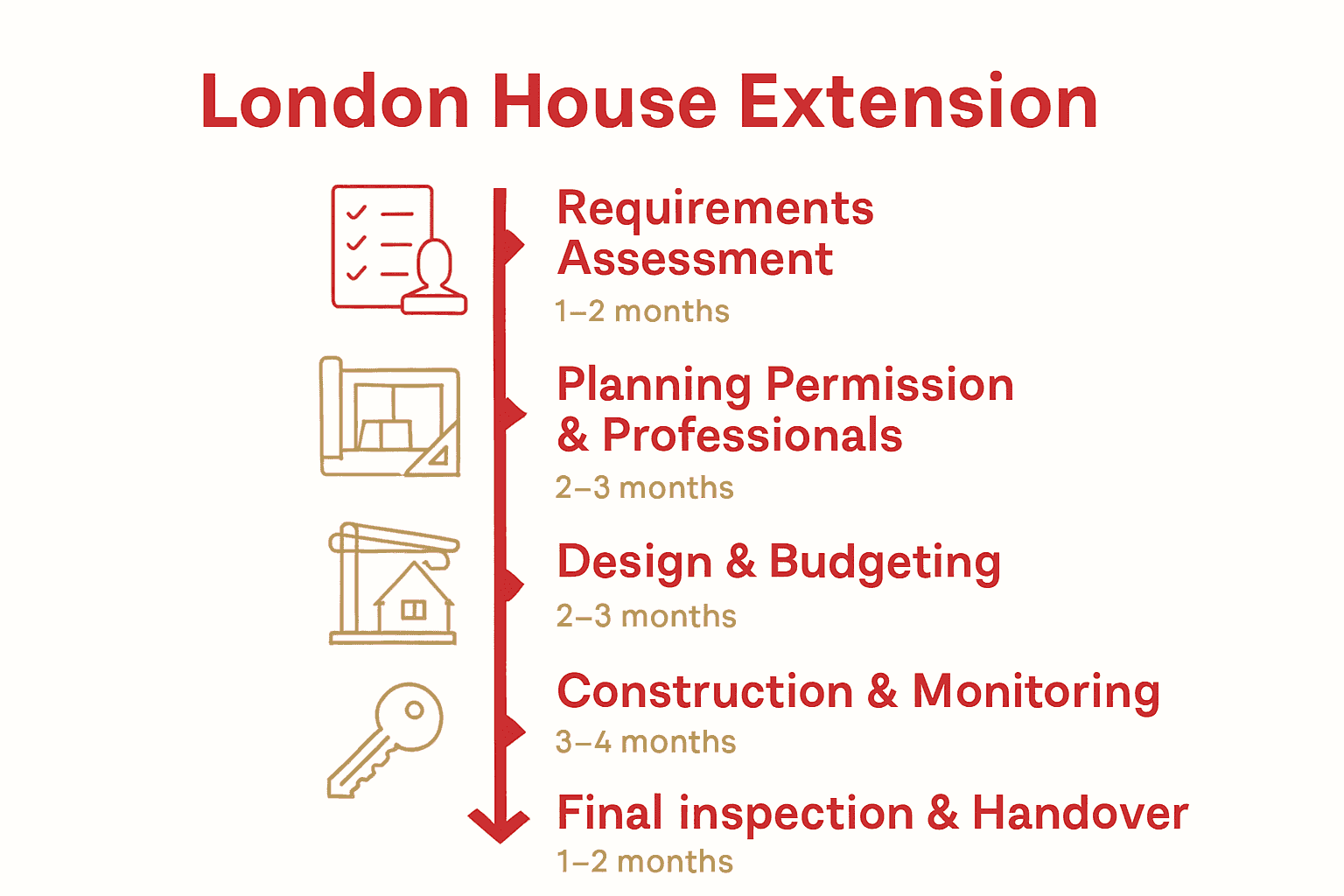
- Step 1: Assess Extension Requirements And Set Objectives
- Step 2: Secure Planning Permission And Hire Professionals
- Step 3: Finalise Design And Confirm Budget
- Step 4: Begin Construction And Monitor Progress
- Step 5: Inspect, Approve, And Complete Handover
Quick Summary
| Key Point | Explanation |
|---|---|
| 1. Assess property for extension feasibility | Evaluate layout, space, light, and boundaries to determine your extension’s potential before designing it. |
| 2. Secure necessary planning permissions | Notify local authorities and ensure all building regulations are met before construction begins. |
| 3. Finalize design with a clear budget | Create a detailed design plan that includes all costs and considers long-term value and adaptability. |
| 4. Monitor construction progress closely | Maintain regular communication with the construction team to track timelines, quality, and budget adherence. |
| 5. Conduct thorough inspections before handover | Ensure all work meets standards by performing a detailed final walkthrough and addressing any issues on a snagging list. |
Step 1: Assess Extension Requirements and Set Objectives
Preparing for a home extension in London begins with a comprehensive assessment of your property’s potential and your specific needs. This critical first step helps you understand exactly what you want to achieve and whether your vision is feasible.
According to Kirklees, conducting a thorough site appraisal is essential before designing an extension. This means carefully evaluating your existing house, its characteristics, and the immediate surroundings to identify both constraints and opportunities. Your assessment should cover several key aspects:
- Property layout and current usage
- Available garden and outdoor space
- Natural light conditions
- Potential views and orientation
- Structural limitations
- Boundary restrictions
Belfast City emphasizes that your extension design should prioritize design quality, preserving private amenity space, and maximizing natural light. Think about how the new space will integrate with your existing home while improving your daily living experience.
Before proceeding, speak with a local planning consultant or architectural professional who understands London’s specific building regulations. They can provide invaluable insights into what’s possible for your unique property and help you refine your initial objectives.
The next step involves translating these initial assessments into a clear, actionable extension plan that balances your lifestyle needs with practical architectural possibilities.
Step 2: Secure Planning Permission and Hire Professionals
Securing planning permission and assembling the right professional team marks a critical phase in your home extension journey. This step transforms your initial vision into a legally compliant and expertly executed project.
According to Gov UK, householders must notify the local planning authority about proposed extensions. The authority will consult with neighboring properties, and critically, work cannot commence until either approval is granted or 42 days have passed without a decision.
Additionally, Building Control Partnership Hants emphasizes that all extensions require Building Regulations approval. This means you are legally responsible for obtaining necessary permissions before any construction begins to ensure safety, compliance, and avoid potential legal complications that could impact future property sales.
When hiring professionals, seek recommendations from trusted sources and interview multiple architects, surveyors, and contractors. Look for specialists with specific experience in London home extensions who understand local planning regulations and can navigate the complex permission process.
Prioritize professionals who offer comprehensive services including:
- Detailed design consultations
- Planning permission application support
- Structural engineering expertise
- Building regulation compliance guidance
The next phase involves finalizing your detailed design and preparing comprehensive documentation for submission to local planning authorities.
Step 3: Finalise Design and Confirm Budget
Finalising your home extension design and establishing a comprehensive budget represents a critical milestone in your renovation journey. This stage transforms your conceptual plans into a detailed blueprint with clear financial parameters.
According to Gov UK, defining the project scope in detail during planning is crucial. This involves identifying desired outcomes, understanding spatial requirements, recognizing site constraints, navigating statutory processes, and carefully considering budget limitations. Critically, any changes implemented after this stage can substantially increase costs or become challenging to implement.
Additionally, Gov UK’s Healthy Homes Standard recommends incorporating broader design considerations such as accessibility, internal space standards, energy performance, ventilation, and future adaptability. These elements not only enhance your immediate living experience but also contribute to long-term property value.
When confirming your budget, create a comprehensive spreadsheet that includes:
- Architectural design fees
- Construction material costs
- Labour expenses
- Potential contingency funds (recommended 10-15%)
- Required permits and inspections
- Potential additional costs for unexpected challenges
Prioritize transparent communication with your design team and contractors. Request detailed quotes, understand potential variations, and ensure all financial expectations are clearly documented in writing.

The next phase involves preparing detailed construction drawings and obtaining final approvals before breaking ground on your home extension project.
Step 4: Begin Construction and Monitor Progress
Launching the construction phase of your home extension marks an exciting transformation from planning to actual building. This critical stage requires active engagement, careful oversight, and systematic progress tracking to ensure your vision becomes a reality.
According to Gov UK, effective project management during construction involves monitoring progress, managing risks, and ensuring compliance with design specifications and regulations. Regular reviews and adjustments help maintain project timelines and quality standards.
Establish a robust communication system with your construction team. Schedule weekly progress meetings, request detailed photographic documentation, and create a shared digital platform where you can track milestones, variations, and potential challenges. This approach promotes transparency and allows for swift problem resolution.
Gov UK’s Continuous Improvement Framework recommends implementing continuous improvement practices. This means actively capturing valuable experiences, sharing learnings, and being prepared to make informed adjustments based on real time observations.
Key monitoring strategies include:
- Verifying daily progress against project timeline
- Checking material quality and installation standards
- Reviewing workmanship and adherence to original design
- Tracking budget expenditure
- Documenting any unexpected discoveries or necessary modifications
Remember that flexibility is crucial. Unexpected challenges are normal in construction projects, so maintain open communication and a collaborative approach with your building team.
The next phase will focus on final inspections, completing remaining details, and preparing for the ultimate reveal of your transformed living space.
Step 5: Inspect, Approve, and Complete Handover
The final stage of your home extension project involves comprehensive inspections, meticulous approvals, and a smooth transition into your newly transformed living space. This critical phase ensures that every detail meets your expectations and regulatory standards.
According to Gov UK, post-occupancy evaluations and monitoring of user satisfaction are essential during the handover phase. These practices help identify areas for improvement and confirm that the extension meets its intended outcomes.
Begin with a thorough walkthrough inspection alongside your project manager and lead contractor. Create a comprehensive checklist that covers:
- Structural integrity and finish quality
- Electrical and plumbing systems functionality
- Compliance with original design specifications
- Paint and decorative elements
- Thermal and acoustic performance
- Accessibility and safety features
Gov UK’s Habitats Regulations emphasizes the importance of an appropriate assessment to ensure the project does not adversely affect surrounding environments or regulatory requirements.
Prepare a detailed snagging list of any minor issues requiring resolution. Request written confirmation that all items will be addressed before final payment. Ensure you receive comprehensive documentation including:
- Completion certificates
- Warranty documentation
- Technical specifications
- Maintenance guidelines
- Compliance verification documents
The handover represents more than a transaction it is the culmination of your vision. Take time to understand your new space, celebrate your achievement, and prepare to enjoy your beautifully transformed home.
Take Control of Your Home Extension Journey in London
Planning and executing a home extension in London can feel overwhelming with so many stages to manage—from securing planning permission to monitoring construction progress carefully. You want your project to run smoothly, stay within budget, and meet all building regulations. Key challenges include navigating the complex approval process, coordinating reliable professionals, and ensuring your vision becomes a comfortable and functional reality.
At Reltic Extend we specialise in guiding homeowners through every step with expert Planning & Permissions for Home Extensions | Reltic Extend and dedicated Project Management for Home Extensions | Reltic Extend. We understand the importance of clear timelines and transparent communication so you never feel left in the dark. Ready to turn your plans into a stylish and durable home extension with no unexpected delays or costs? Take the next step now and get personalised support by reaching out through our contact page. Your dream home extension is closer than you think.
Frequently Asked Questions
How long does the entire house extension process typically take?
The timeline for a house extension can vary, but expect the complete process to take several months, often between 6 to 12 months. Start by assessing your property and developing detailed designs within the first few months to stay on schedule.
What are the key steps to secure planning permission for a house extension?
To secure planning permission, first prepare detailed designs and submit them to your local planning authority. Ensure that this step is completed well ahead of your intended construction start date, commonly around 8 to 12 weeks for the approval process.
How can I effectively monitor the construction progress of my house extension?
You can effectively monitor construction progress by setting up regular check-ins with your construction team, ideally on a weekly basis. Establish clear documentation practices to track milestones and challenges to ensure the project stays on timeline.
What should I include in my budget for a house extension?
Your budget for a house extension should include costs for architectural design fees, construction materials, labor, permits, and a contingency fund of about 10-15%. Calculate these figures in advance to prevent unexpected costs from delaying your project.
What final inspections are necessary before completing my house extension?
Before completing your house extension, conduct thorough inspections of structural integrity, systems functionality, and compliance with your original design specifications. Prepare a snagging list of any issues to ensure they are resolved before final approval and payment.
How can I prepare for a smooth handover once the construction is complete?
To prepare for a smooth handover, create a detailed checklist that covers all necessary inspections, including structural and finish quality, functionality, and safety features. Ensure you receive all essential documentation, such as completion certificates and maintenance guidelines, to manage your new space effectively.