

Most british homeowners are surprised to learn that over half of planning permission applications face delays or extra scrutiny every year. Whether you are considering a loft extension or a full renovation, understanding the complex rules behind planning permission can save you countless headaches. Myths and confusion often lead to costly mistakes, but clarity is possible. This guide cuts through the misinformation, helping you protect your home and make confident decisions about your property.
Table of Contents
- Defining Planning Permission And Common Myths
- Different Types Of UK Planning Permissions
- Key Features: Full, Outline, Householder Consent
- Permitted Development Rights And Limitations
- Legal Process, Requirements, And Timeframes
- Risks, Costs, And Common Mistakes To Avoid
Key Takeaways
| Point | Details |
|---|---|
| Understanding Planning Permission | Planning permission is essential for property modifications in the UK, and misconceptions about its necessity can cause unnecessary stress for homeowners. |
| Types of Permissions | Familiarise yourself with various planning permission types, such as full, outline, and householder consent, to ensure compliance with regulations. |
| Permitted Development Rights | Homeowners should be aware of permitted development rights, which allow certain modifications without formal approval, albeit with specific limitations. |
| Navigating the Process | Engage with local planning authorities and professionals to navigate the application process efficiently and avoid common pitfalls that can lead to delays and costs. |
Defining Planning Permission and Common Myths
Planning permission represents a critical legal mechanism that governs property development and modifications across the United Kingdom. According to gov.uk, it is the formal approval required for most types of development or changes in land use, serving as a key regulatory tool to maintain architectural integrity and neighbourhood standards.
Many homeowners harbour misconceptions about when planning permission becomes necessary. Permitted development rights actually cover numerous home improvement scenarios, allowing property owners significant flexibility. As CPRE explains, not every modification demands formal approval. These rights enable certain renovations and extensions without navigating complex bureaucratic processes.
Common myths surrounding planning permission often create unnecessary stress for property owners. For instance, people frequently assume that any structural change automatically requires permission. In reality, many home improvements fall under permitted development, which means you can proceed without formal consent. However, these rights come with specific limitations regarding size, positioning, and potential impact on neighbouring properties. Understanding these nuanced regulations can save considerable time, money, and potential legal complications.

To navigate planning permissions effectively, homeowners should familiarise themselves with local council guidelines and understanding the house extension approval process. Each project’s unique characteristics determine whether formal permission is required, making it essential to conduct thorough research or consult professional extension specialists before commencing any significant property modifications.
Different Types of UK Planning Permissions
The UK planning system encompasses several distinct types of planning permissions, each serving specific development scenarios. According to Planning Portal, these include full planning consent, outline planning consent, reserved matters, listed building consent, and advertisement consent. Understanding these variations is crucial for homeowners and property developers navigating complex regulatory landscapes.
Full planning permission represents the most comprehensive approval process, typically required for substantial building projects or significant property modifications. Outline planning consent offers a preliminary assessment, allowing developers to establish the potential feasibility of a project before committing to detailed designs. As RSPB explains, reserved matters applications provide an additional layer of specificity, enabling local authorities to scrutinise precise development details after initial outline approval.
Specialised consent types address unique property scenarios. Listed building consent protects historical structures, ensuring modifications preserve architectural heritage. Advertisement consent governs commercial signage and marketing displays, demonstrating the planning system’s comprehensive approach to managing visual and structural changes. These nuanced permissions reflect the complexity of urban and rural development regulations.
For homeowners considering extensions or modifications, understanding these different planning permission types becomes essential. Each permission type carries specific requirements, timelines, and potential constraints. Consulting local planning authorities or professional extension specialists can help navigate these intricate regulatory frameworks, ensuring compliance and minimising potential legal complications during property development projects.
Key Features: Full, Outline, Householder Consent
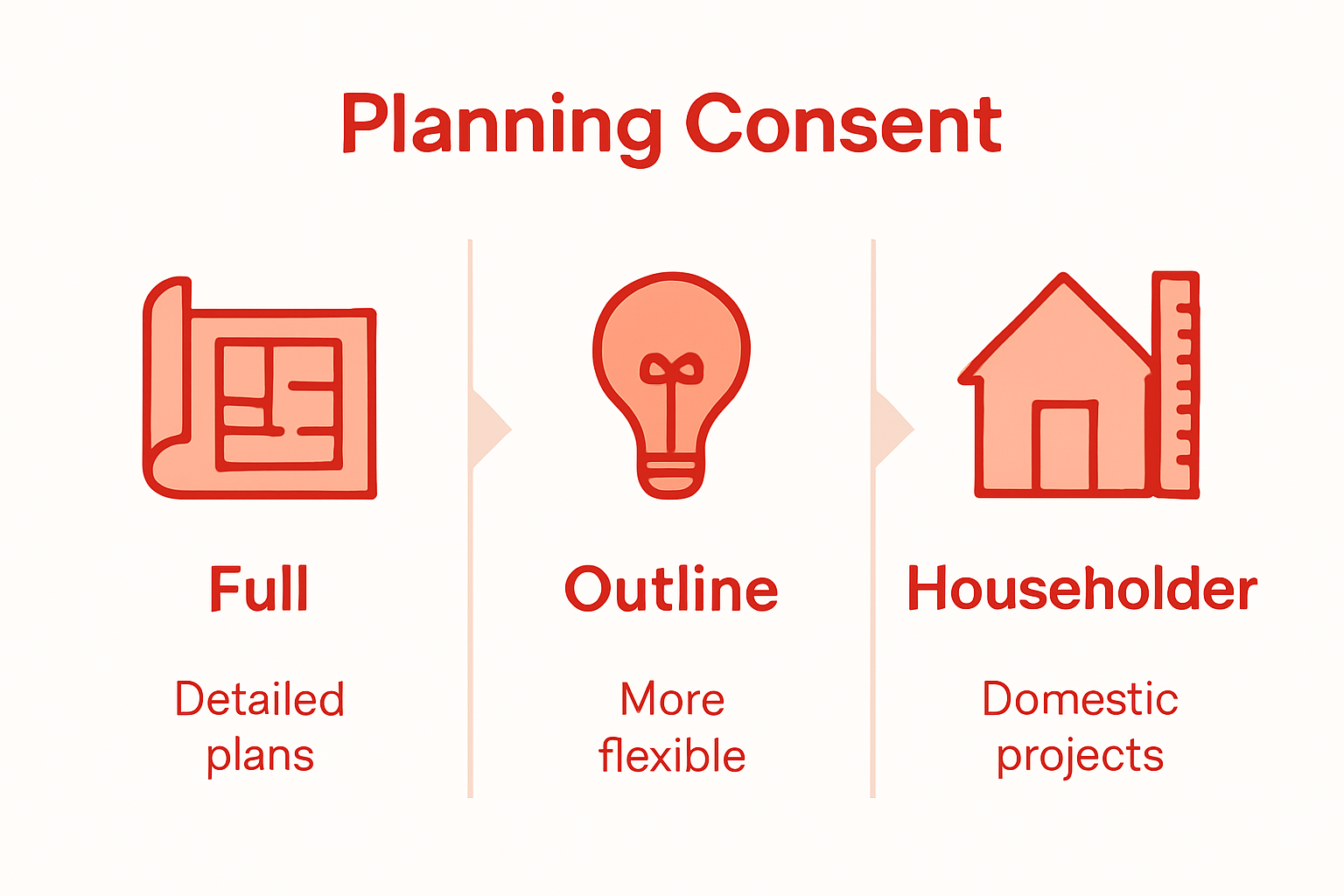
The UK planning system offers three primary types of planning consent, each designed to address specific development scenarios. According to Planning Portal, these include full planning consent, outline planning consent, and householder planning consent, each with distinct characteristics and application requirements.
Full planning consent represents the most comprehensive approval process, demanding exhaustive details about proposed developments. As RSPB explains, this type of consent requires applicants to provide complete documentation covering architectural plans, environmental impact, and potential neighbourhood implications. Outline planning consent, by contrast, offers a more flexible approach, allowing developers to establish the fundamental feasibility of a project before investing in intricate design specifications.
Householder planning consent specifically addresses modifications to existing residential properties. This consent type covers home extensions, significant alterations, and structural changes that fall outside permitted development rights. Typical scenarios include constructing conservatories, adding dormer windows, or creating substantial rear extensions. These applications typically require detailed drawings, site plans, and a comprehensive explanation of proposed modifications.
For homeowners contemplating property improvements, understanding these planning permission types is crucial. Each consent category involves unique submission requirements, assessment criteria, and potential consultation processes. Consulting local planning authorities or professional extension specialists can provide tailored guidance, helping navigate the complex regulatory landscape and increase the likelihood of successful planning applications.
Permitted Development Rights and Limitations
Permitted development rights represent a crucial flexibility within the UK planning system, allowing homeowners to undertake certain improvements without obtaining formal planning permission. According to gov.uk, these rights enable property owners to make specific modifications to their homes and land without navigating complex bureaucratic processes.
The scope of permitted development rights varies significantly depending on property type, location, and specific circumstances. gov.uk highlights that these rights are not unlimited and come with precise conditions and restrictions. Typical permitted developments might include modest rear extensions, loft conversions within specified size parameters, and certain exterior alterations that do not substantially change a property’s external appearance or impact neighbouring properties.
Limitations are critical to understanding these development rights. Homeowners must navigate complex restrictions related to height, volume, positioning, and potential impact on conservation areas or listed buildings. For instance, extensions must typically not exceed specified cubic metre limits, and modifications in designated areas like national parks or Areas of Outstanding Natural Beauty face more stringent constraints. Materials, design, and overall visual impact are carefully scrutinised to maintain architectural integrity and neighbourhood character.
For those considering home improvements, understanding these nuanced permitted development extensions becomes essential. While these rights offer significant flexibility, professional consultation remains crucial. Local planning authorities can provide definitive guidance, helping homeowners distinguish between permitted developments and those requiring formal planning consent, thereby preventing potential legal complications and ensuring compliant, successful home improvement projects.
Legal Process, Requirements, and Timeframes
The legal process for obtaining planning permission involves a structured, meticulous approach designed to ensure comprehensive review of proposed developments. According to gov.uk, the process begins with submitting a detailed application to the local planning authority, which includes comprehensive documentation outlining the proposed project’s specific characteristics, potential impacts, and compliance with local planning regulations.
Application requirements are stringent and multifaceted. Planning Portal emphasises the necessity of providing precise documentation, including detailed site plans, architectural drawings, and impact assessments. Typical mandatory submissions include scaled drawings, site location plans, existing and proposed floor plans, and comprehensive descriptions of materials and design intentions. The associated fees vary depending on the project’s scale and complexity, with larger developments incurring significantly higher charges.
Timeframes for planning permission can be unpredictable, typically ranging from eight to thirteen weeks for standard applications. Local planning authorities conduct thorough assessments, which may involve public consultations, neighbour notifications, and detailed scrutiny of potential environmental and architectural implications. Critical considerations include the project’s compliance with local development plans, potential impact on neighbourhood character, and adherence to specific zoning regulations. Factors such as conservation areas, listed buildings, or properties in sensitive locations can substantially extend the review process.
For homeowners navigating these complex planning permission requirements, professional guidance becomes invaluable. Understanding the intricacies of the application process, preparing comprehensive documentation, and anticipating potential challenges can significantly streamline the journey. Local planning authorities remain the primary source of definitive guidance, offering tailored advice to ensure smooth, compliant, and successful planning permission applications.
Risks, Costs, and Common Mistakes to Avoid
Navigating the planning permission landscape involves understanding potential financial and regulatory risks that can significantly impact home improvement projects. According to gov.uk, varying and overlapping planning permissions can lead to substantial delays and unexpected financial burdens, making careful preparation essential for homeowners.
Common misconceptions can prove costly and time-consuming. Planning House highlights several critical mistakes homeowners frequently make, including assumptions about automatic permitted development rights and misunderstanding the scope of potential modifications. Typical errors include proceeding with developments without verifying permission requirements, underestimating documentation needs, and failing to consider potential neighbourhood objections or conservation area restrictions.
Financial risks extend beyond initial application fees. Potential costs include professional survey expenses, architectural drawings, potential legal consultations, and the risk of retrospective enforcement actions if developments proceed without proper consent. Significant financial penalties can arise from unauthorized modifications, potentially requiring expensive modifications or complete removal of unpermitted structures. Conservation areas and properties with special designations face even more stringent regulations, with potential fines reaching thousands of pounds for non-compliance.
For homeowners seeking to mitigate these risks, thorough preparation and professional guidance become paramount. understanding the planning permission requirements can help navigate these complex regulatory landscapes. Consulting local planning authorities, engaging professional extension specialists, and conducting comprehensive research before commencing any project can significantly reduce potential legal and financial complications.
Simplify Your Planning Permission Journey with Expert Support
Understanding the different types of planning permissions can feel overwhelming given the complex regulations and strict legal requirements involved. The challenges of navigating full, outline, and householder consents, along with the limitations of permitted development rights, often cause confusion and delays that risk adding stress and cost to your home extension project. You want to ensure your plans meet all local council criteria while avoiding common mistakes and unforeseen legal pitfalls.
At Reltic Extend, we specialise in guiding homeowners through every step of the planning and permission process. Our in-depth knowledge of Planning & Permissions for Home Extensions | Reltic Extend means we handle all the paperwork and liaison with local authorities so you don’t have to worry. Whether you are considering a rear, kitchen, side, or double-storey extension, we combine seamless Project Management for Home Extensions | Reltic Extend with expert design and construction to deliver a smooth, timely, and compliant build.
Don’t let planning permission complexity hold back your dream home improvements. Take control today by contacting our team at Reltic Extend. Our trusted advice and professional service ensure your extension project progresses without delay or costly surprises.
Frequently Asked Questions
What are the different types of planning permissions in the UK?
The main types of planning permissions include full planning consent, outline planning consent, reserved matters, listed building consent, and advertisement consent. Each serves a specific purpose in the property development process.
When is householder planning consent required?
Householder planning consent is necessary for significant modifications to existing residential properties, including extensions, alterations, and structural changes that exceed permitted development rights.
How long does it typically take to get planning permission?
The timeframe for obtaining planning permission can vary, typically ranging from eight to thirteen weeks for standard applications, depending on the complexity of the project and the local planning authority’s processes.
What are permitted development rights?
Permitted development rights allow homeowners to make certain modifications and home improvements without the need for formal planning permission, although these rights come with specific limitations regarding size, positioning, and impact on neighbouring properties.