

Over 60 percent of british homeowners say confusing extension rules have delayed or derailed their renovation plans. Choosing to extend your home in the UK comes with a maze of regulations that often leave even the most organised individuals scratching their heads. Understanding these complex guidelines not only saves time and prevents costly mistakes, but also helps you unlock the freedom to create your ideal living space within british legal boundaries.
Table of Contents
- Defining Home Extension Regulations In The UK
- Permitted Development Rights Explained
- Planning Permission Requirements For Extensions
- Building Control And Compliance Standards
- Costs, Timeframes, And Legal Liabilities
- Common Pitfalls And Regulatory Mistakes
Key Takeaways
| Point | Details |
|---|---|
| Understanding Regulations | Homeowners must navigate complex regulations regarding home extensions, balancing personal desires with community standards and local guidelines. |
| Permitted Development Rights | Familiarity with permitted development rights allows homeowners to undertake certain extensions without formal planning permission, provided they meet specific criteria. |
| Planning Permission Process | Not all extensions require planning permission; however, those that do must consider structural integrity, design compatibility, and local character. |
| Cost and Legal Considerations | Extension projects entail varied costs and legal liabilities; homeowners should prepare for potential financial implications and the importance of compliance with all regulations. |
Defining Home Extension Regulations in the UK
Home extension regulations in the United Kingdom form a complex framework designed to balance homeowner aspirations with broader urban planning considerations. These regulations govern how and where property owners can modify their existing residential structures, ensuring developments meet safety, aesthetic, and community standards. According to the gov.uk consultation, recent proposals aim to provide homeowners with greater flexibility for home extensions while maintaining essential planning controls.
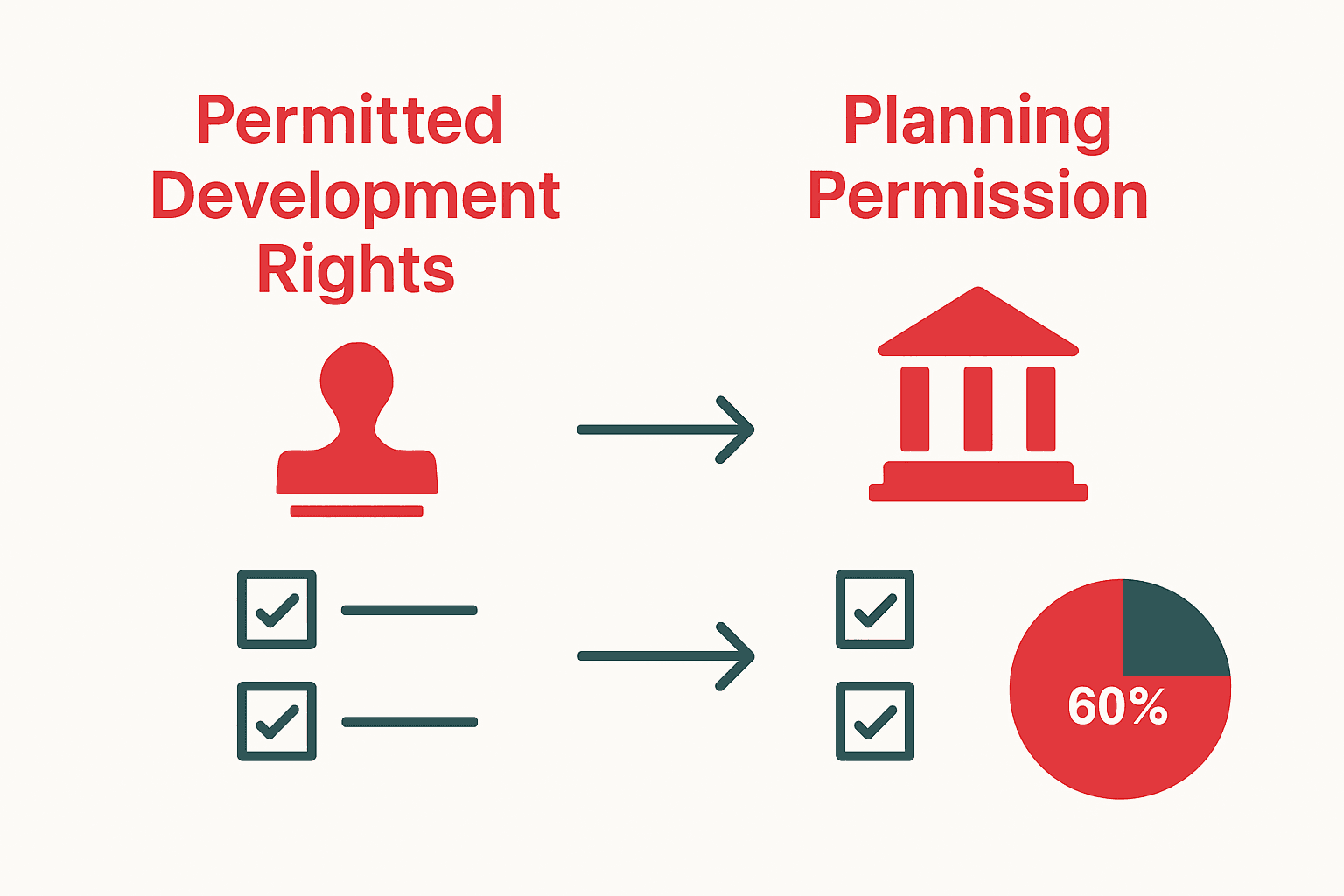
The legal framework for home extensions primarily revolves around two critical mechanisms: permitted development rights and full planning permissions. Permitted development rights allow homeowners to undertake certain types of extensions without requiring formal planning approval, subject to specific conditions. The Town and Country Planning (General Permitted Development) (England) (Amendment) Order 2025 introduces detailed conditions that define the precise limitations for various home extension types. These regulations typically consider factors such as:
- Maximum extension size
- Distance from property boundaries
- Height restrictions
- Impact on neighboring properties
- Materials and design compatibility
Navigating these regulations requires a nuanced understanding of local planning guidelines and national building standards. Homeowners must carefully assess their specific property characteristics, local conservation area restrictions, and potential impact on surrounding buildings. For a comprehensive walkthrough of the house extension approval process, check out our guide on understanding the house extension approval process.
While the regulations might seem intricate, they ultimately serve to protect homeowners, neighbors, and community architectural integrity. Successful home extensions demand meticulous planning, thorough research, and often professional guidance to ensure compliance with the evolving regulatory landscape of UK property development.
Permitted Development Rights Explained
Permitted development rights represent a crucial mechanism within UK property law that allows homeowners to extend or modify their properties without navigating the complex full planning permission process. HomeBuilding.co.uk highlights the significance of these rights, which essentially provide a streamlined pathway for minor residential developments.
The scope of permitted development rights encompasses several key extension types, with specific parameters defining what modifications are allowable without formal planning approval. According to the gov.uk consultation, these rights typically include:
- Single-storey rear extensions
- Modest side extensions
- Loft conversions within defined volume limits
- Outbuildings and garden structures
- Changes of use for certain property types
Crucial limitations exist within these rights. Homeowners must adhere to strict conditions regarding:
- Maximum extension dimensions
- Distance from property boundaries
- Total coverage of the original plot
- Materials and design compatibility
- Impact on neighboring properties
For homeowners seeking to leverage these rights effectively, understanding the nuanced regulations is paramount. Our guide to permitted development extensions provides comprehensive insights into navigating these complex requirements.
While permitted development rights offer flexibility, they are not a blanket permission. Local authority regulations, conservation area restrictions, and individual property characteristics can significantly impact what modifications are permissible. Homeowners are always advised to consult local planning departments or seek professional guidance to ensure full compliance with current regulations.
Planning Permission Requirements for Extensions
Planning permission for home extensions represents a critical regulatory process that ensures residential developments meet local and national building standards. Gov.uk highlights ongoing consultations aimed at providing homeowners with more flexible extension opportunities while maintaining essential planning controls.
The planning permission process involves a comprehensive assessment of proposed home extensions, considering multiple critical factors:
- Structural integrity and design compatibility
- Impact on neighboring properties
- Conservation area restrictions
- Local architectural character
- Environmental considerations
- Potential disruption to local infrastructure
HomeBuilding.co.uk emphasizes that not all extensions require full planning permission. Some modifications fall under permitted development rights, which allow homeowners to make specific improvements without formal approval. However, these rights come with strict dimensional and design constraints that must be meticulously followed.
Navigation of planning permission requirements can be complex, varying significantly between different local authorities and property types. Homeowners must carefully evaluate their specific circumstances, considering factors like property location, existing structure, and proposed extension dimensions. Our guide to planning permission for extensions provides comprehensive insights into determining whether your specific project requires formal approval.
Successful planning permission applications demand thorough preparation, detailed documentation, and a clear understanding of local regulatory landscapes. Professional consultation can significantly improve the likelihood of approval, helping homeowners transform their vision into reality while maintaining compliance with essential building regulations.
Building Control and Compliance Standards
Building control and compliance standards form the critical backbone of home extension regulations, ensuring structural safety, quality, and adherence to national building guidelines. Legislation.gov.uk outlines the Town and Country Planning (General Permitted Development) (England) (Amendment) Order 2025, which provides comprehensive frameworks for managing residential extension projects.
The compliance standards encompass a wide range of critical considerations that homeowners must navigate:
- Structural integrity requirements
- Thermal efficiency specifications
- Fire safety regulations
- Electrical and plumbing standards
- Accessibility considerations
- Sound insulation measurements
- Material quality and durability
Gov.uk highlights ongoing consultations aimed at refining these standards, demonstrating the dynamic nature of building regulations. These evolving guidelines seek to balance homeowner flexibility with essential safety and community preservation objectives.
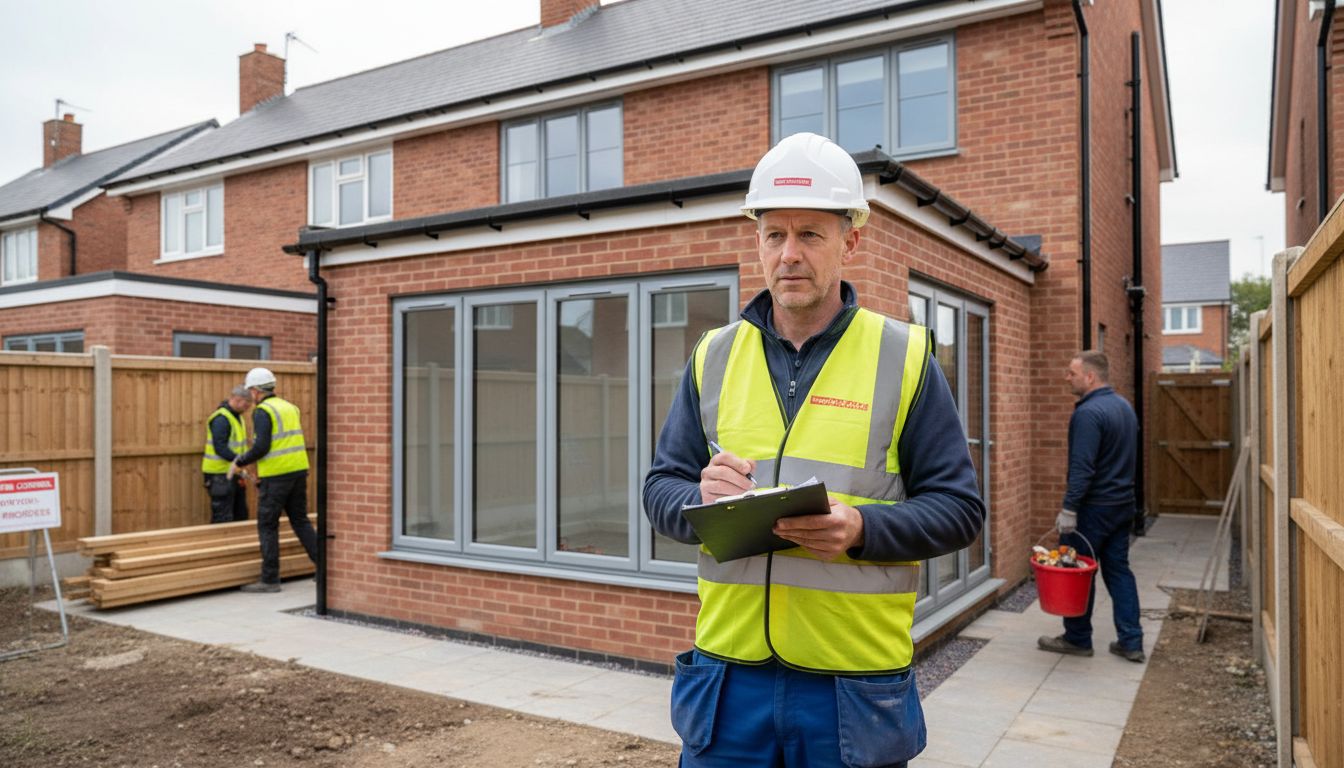
Compliance involves multiple stages of inspection and approval, requiring homeowners to engage with local building control departments or approved independent inspectors. Detailed documentation, precise measurements, and adherence to technical specifications are paramount. For comprehensive guidance through this complex process, our guide to building regulations for extensions provides in-depth insights into navigating these intricate requirements.
Successful building control compliance demands meticulous planning, professional expertise, and a thorough understanding of current regulatory landscapes. Homeowners who invest time in understanding these standards can transform their extension projects from potential regulatory challenges into smooth, approved developments that meet the highest national building quality benchmarks.
Costs, Timeframes, and Legal Liabilities
Home extension projects involve intricate financial planning, regulatory compliance, and potential legal complexities that homeowners must carefully navigate. HomeBuilding.co.uk provides insights into the multifaceted landscape of extension costs, timeframes, and associated legal considerations.
The financial landscape of home extensions varies significantly depending on multiple factors:
- Extension type and size
- Complexity of design
- Materials selected
- Location and local market conditions
- Professional fees for architects and surveyors
- Planning and building control costs
- Potential structural modifications
HAHAPediatric highlights that homeowners should anticipate comprehensive cost breakdowns, including:
- Initial design and consultation fees
- Planning application expenses
- Building regulation approval costs
- Construction and material expenses
- Potential contingency budgets for unexpected challenges
Legal liabilities represent a critical consideration in home extension projects. Unauthorized or non-compliant extensions can result in significant financial penalties, including potential enforcement notices requiring complete demolition or retroactive modifications. Homeowners must obtain all necessary permissions and adhere strictly to local building regulations. Our guide to understanding home extension planning requirements offers comprehensive insights into navigating these complex legal landscapes.
Successful home extension projects demand meticulous financial planning, rigorous legal compliance, and a proactive approach to managing potential risks. Investing time in understanding the full scope of costs, timeframes, and legal obligations can transform a potentially challenging process into a smooth, rewarding home improvement journey.
Common Pitfalls and Regulatory Mistakes
Home extension projects are fraught with potential regulatory challenges that can derail even the most meticulously planned developments. HomeBuilding.co.uk highlights the critical importance of understanding the intricate landscape of planning regulations and potential legal pitfalls.
The most common regulatory mistakes homeowners encounter include:
- Proceeding without proper planning permissions
- Underestimating boundary and conservation area restrictions
- Failing to obtain building control approvals
- Ignoring neighbour consultation requirements
- Miscalculating extension dimensions
- Overlooking environmental protection guidelines
- Neglecting structural compliance standards
Propertymark emphasizes that legislative changes can create additional complexity for homeowners. Specific risks include:
- Inadvertent breaches of newly updated regulations
- Misinterpreting permitted development rights
- Incomplete documentation of proposed modifications
- Insufficient understanding of local planning constraints
- Failure to account for recent legislative amendments
Navigating these potential pitfalls requires a proactive and informed approach. Professional consultation becomes crucial in mitigating risks and ensuring full regulatory compliance. Our guide to understanding home extension planning requirements provides comprehensive insights to help homeowners avoid these common regulatory traps.
Successful home extensions demand more than just creative design and financial planning. They require a deep understanding of regulatory landscapes, meticulous attention to detail, and a commitment to full legal compliance. By anticipating potential challenges and seeking professional guidance, homeowners can transform potentially complex regulatory processes into smooth, successful home improvement projects.
Simplify Your Home Extension Journey with Expert Guidance
Navigating the complex landscape of home extension regulations and planning permissions in the UK can be overwhelming. From understanding permitted development rights to meeting strict building control standards every step is crucial to avoid costly delays or legal issues. If you have objectives like expanding your living space with a rear or double-storey extension but feel daunted by the process of securing planning consent or complying with local guidelines our specialist team can help.
Discover how we turn regulatory challenges into seamless projects with over 20 years of experience in London and Surrey. Whether you need advice on the exact permissions needed or want bespoke design ideas explore our Planning & Permissions for Home Extensions | Reltic Extend and Types of Home Extensions & Ideas | Reltic Extend to get inspired and informed. Ready to take the next step and create your dream space while staying fully compliant? Contact us today via https://relticextend.co.uk/contact-us and benefit from transparent pricing, expert project management and a 10-year structural warranty. Let’s build your perfect extension with confidence and care.
Frequently Asked Questions
What are permitted development rights for home extensions?
Permitted development rights allow homeowners to extend their properties without needing full planning permission, subject to specific conditions regarding size, distance from boundaries, and design compatibility.
When do I need planning permission for a home extension?
Planning permission is needed if your proposed extension exceeds the limits of permitted development rights, such as maximum extension sizes, heights, or if there are conservation area restrictions.
What is the building control process for home extensions?
The building control process involves ensuring that any home extension complies with safety and construction standards. It requires inspections and approvals at various stages to confirm that the work meets regulatory requirements.
What are common mistakes to avoid when applying for home extension regulations?
Common mistakes include proceeding without proper permissions, underestimating boundary restrictions, failing to consult neighbours, and neglecting to update documentation in case of recent regulatory changes.
Recommended
- Complete Guide to Building Regulations for Extensions – Reltic Extend
- Understanding the House Extension Approval Process – Reltic Extend
- Home Extension Trends: Complete Guide for 2025 UK – Reltic Extend
- 7 Smart Extension Design Tips 2025 for London Homeowners – Reltic Extend
- Shutters for Renovations: Complete Guide for UK Homes | Shutter World
- Shutter Hinge Types UK: Guide for Homes and Renovations 2025 | Shutter World