
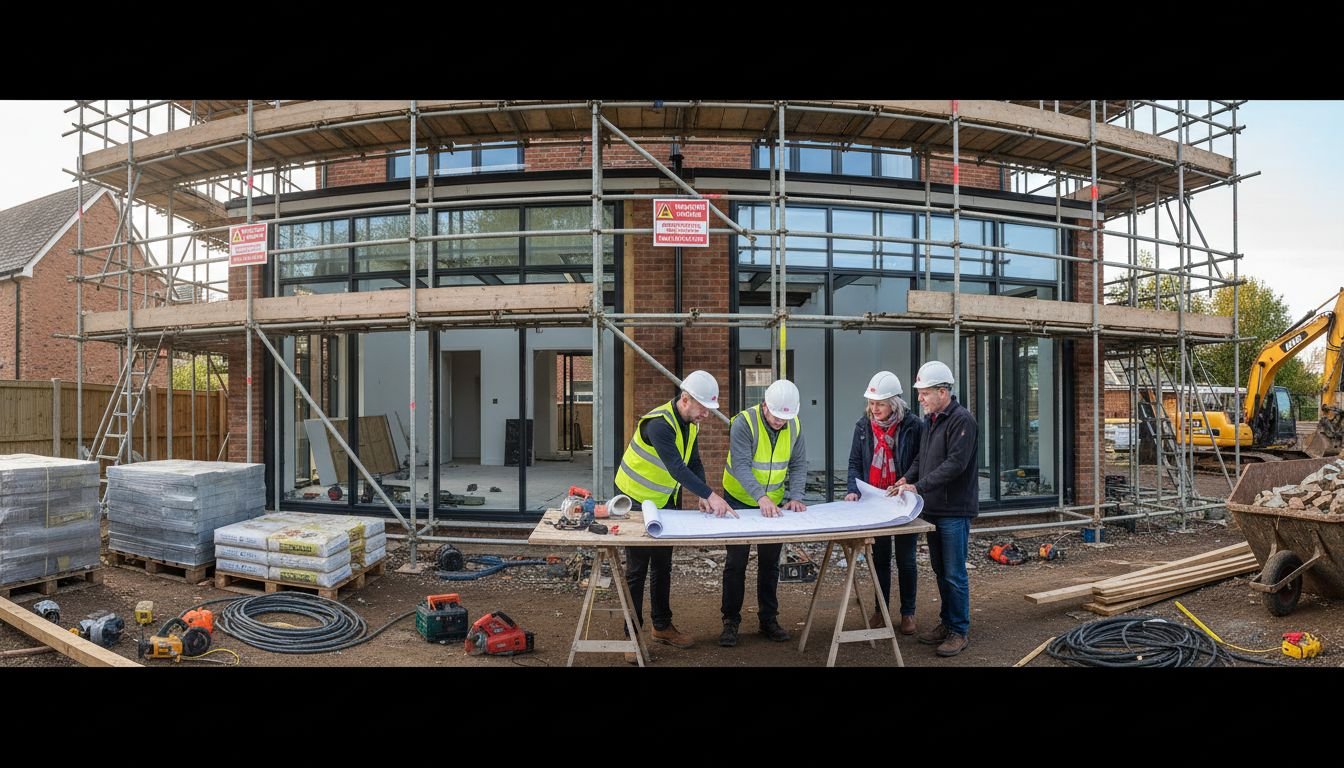
Most british homeowners are surprised to learn that building a house extension can cost anywhere from £1,500 to £3,000 per square metre in 2025. With material prices rising and planning requirements growing stricter, tackling an extension project means navigating a shifting financial landscape. Knowing what drives these expenses and how to budget wisely helps you avoid costly mistakes and make confident decisions throughout your home improvement journey.
Table of Contents
- Defining Extension Costs For 2025 Projects
- Popular Extension Types And Average Expenses
- Breakdown Of Key Cost Drivers And Stages
- Planning Permission And Uk Building Regulations
- Budgeting, Avoiding Pitfalls, And Cost-Saving Tips
Key Takeaways
| Point | Details |
|---|---|
| Budgeting is essential for extensions | Homeowners should create a comprehensive budget that covers expected expenses and includes a contingency fund of 10-20% for unforeseen costs. |
| Understand key cost determinants | Factors such as project scale, location, and design complexity can dramatically impact overall extension costs, necessitating careful analysis. |
| Planning permissions are crucial | Familiarity with planning permission and building regulations is vital, as legal compliance can add significant time and costs to projects. |
| Explore various extension types | Different extension styles have distinct cost implications; assessing popular options can lead to better financial decisions. |
Defining Extension Costs for 2025 Projects
Extension costs in the UK represent a complex financial landscape that varies dramatically depending on multiple critical factors. Home extension projects in 2025 will require careful financial planning and strategic budgeting to ensure successful completion. According to the National Association of Building Contractors, homeowners must consider several key elements when estimating their potential investment.
The primary components driving extension costs include project scale, geographical location, material selections, and structural complexity. London-based projects, for instance, typically command higher prices compared to suburban or rural developments. HomeOwners Alliance highlights that professional fees, planning permissions, and VAT can significantly impact overall project expenses. Expect costs to range between £1,500 to £2,500 per square metre for standard residential extensions, with premium projects potentially reaching £3,000 per square metre.
Key cost determinants homeowners should evaluate include:
- Structural requirements
- Architectural design complexity
- Quality of materials selected
- Local building regulation compliance
- Professional consultation fees
- Site accessibility and preparation
Understanding these nuanced factors will enable more accurate budgeting and help prevent unexpected financial challenges during your home extension project.
 Understanding the Cost Breakdown of Extensions provides additional insights into navigating these intricate financial considerations effectively.
Popular Extension Types and Average Expenses
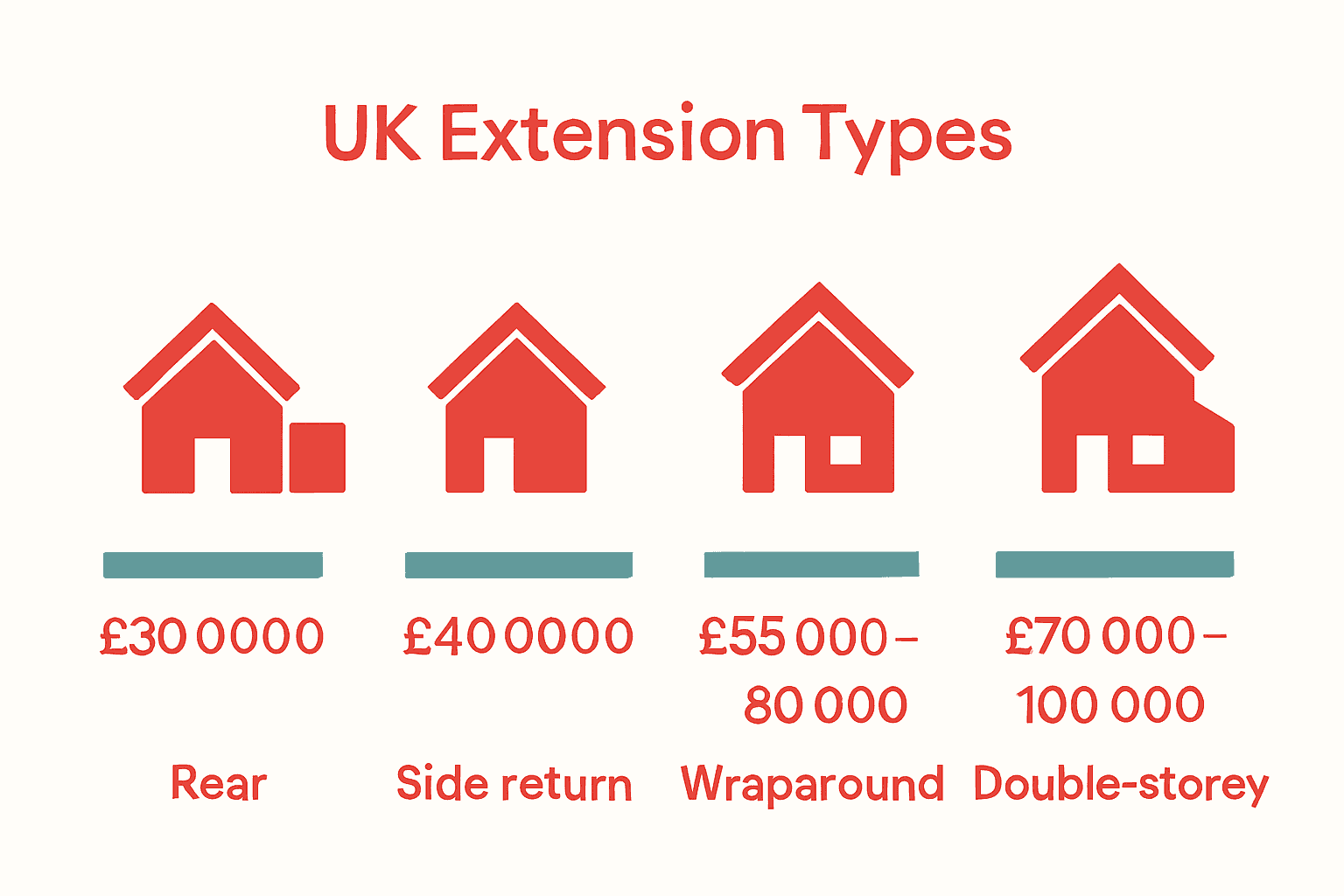
Homeowners in the UK are increasingly exploring diverse extension types to maximise living space and property value. Each extension style offers unique advantages and comes with distinct cost implications that can significantly impact overall investment. The most prevalent extension types in 2025 include rear extensions, side return extensions, wraparound extensions, and double-storey extensions, each presenting homeowners with strategic options for home improvement.
Rear extensions remain the most popular choice, typically ranging from £30,000 to £75,000 depending on size and specifications. These extensions usually extend into garden spaces, creating seamless indoor-outdoor living environments. Side return extensions offer a more compact solution, averaging £25,000 to £50,000, particularly effective for terraced and narrow properties in urban areas like London. Wraparound extensions, which combine rear and side extensions, provide maximum flexibility and can cost between £50,000 and £90,000.
Cost variations depend on several critical factors:
- Total square metres being extended
- Quality of materials selected
- Complexity of architectural design
- Structural modifications required
- Location within the UK
- Professional fees and labour costs
For homeowners seeking comprehensive financial planning, the home extension budget checklist provides essential guidance in navigating these intricate investment decisions. Double-storey extensions represent the most expensive option, potentially ranging from £75,000 to £150,000, but offer substantial additional living space and potentially significant property value enhancement.
Breakdown of Key Cost Drivers and Stages
Home extension projects in 2025 involve a complex series of financial stages that require meticulous planning and strategic budgeting. National Association of Building Contractors highlights that understanding these cost drivers is crucial for homeowners seeking to manage their investment effectively. The project journey typically encompasses multiple financial phases, each contributing significantly to the overall expenditure.
According to the HomeOwners Alliance, the key cost stages can be broken down into distinct categories that homeowners must carefully consider. These stages include initial design and architectural fees, planning permission applications, structural engineering assessments, material procurement, labour costs, and final finishing works. Professional fees alone can represent 10-15% of the total project budget, with planning permissions and legal compliance adding additional expenses.
Key cost drivers that significantly impact project expenses include:
- Architectural and design complexity
- Site accessibility and preparation
- Quality and sourcing of building materials
- Structural modifications required
- Local building regulation compliance
- Professional consultation and project management fees
- Unexpected structural or technical challenges
To effectively manage these financial intricacies, homeowners should develop a comprehensive budget that accounts for potential contingencies. Understanding What Impacts Extension Cost for Your Home provides additional insights into navigating the complex financial landscape of home extension projects. Typically, a contingency fund of 10-20% is recommended to address unforeseen expenses and ensure project flexibility.
Planning Permission and UK Building Regulations
Navigating the complex landscape of planning permission and building regulations represents a critical aspect of home extension projects in the UK. HomeOwners Alliance highlights that homeowners must carefully understand the legal requirements and associated costs before commencing any construction work. The regulatory framework aims to ensure structural safety, maintain neighbourhood aesthetics, and protect local community interests.
Most home extensions fall under two primary regulatory categories: planning permission and building regulation approval. According to the Solihull Council, domestic extension fees can vary significantly based on project scope and complexity. Typically, smaller extensions may qualify for permitted development rights, which allow construction without formal planning permission, though specific conditions must be strictly met.
Key considerations for homeowners include:
- Maximum extension height and total square metre limitations
- Distance from property boundaries
- Impact on neighbouring properties
- Materials and design consistency with existing structures
- Potential conservation area or listed building restrictions
- Structural integrity and safety standards
To streamline the complex approval process, understanding the planning permission requirements becomes essential. Building regulation approval typically costs between £500 and £1,200, depending on the project’s complexity, and involves comprehensive inspections to ensure compliance with national construction standards. Homeowners are advised to budget for these regulatory expenses and engage professional support to navigate the intricate approval processes effectively.
Budgeting, Avoiding Pitfalls, and Cost-Saving Tips
Budgeting for a home extension requires strategic financial planning and a comprehensive understanding of potential expenses and hidden costs. HomeOwners Alliance emphasises the critical importance of developing a robust financial strategy that accounts for both anticipated and unexpected expenditures. Successful home extension projects demand meticulous financial preparation and a realistic approach to managing project costs.
According to the National Association of Building Contractors, homeowners can implement several strategic approaches to control project expenses and mitigate financial risks. Budget contingencies play a crucial role, with experts recommending setting aside 10-20% of the total project budget to address unforeseen challenges, structural complications, or material price fluctuations.
Key cost-saving strategies include:
- Obtain multiple competitive quotes from reputable contractors
- Consider phased construction to spread financial investment
- Select cost-effective yet durable building materials
- Negotiate flexible payment schedules with contractors
- Minimise structural modifications where possible
- Plan project during off-peak construction seasons
- Leverage permitted development rights to reduce planning costs
8 Essential Home Extension Budgeting Tips provides additional insights into financial management. Professional quantity surveyors recommend thorough research, transparent communication with contractors, and maintaining flexibility throughout the project to ensure financial control and successful completion within budgetary constraints.
Take Control of Your Home Extension Budget Today
Understanding the true costs of a home extension in 2025 can feel overwhelming with so many variables to consider from planning permissions to material choices. If you are worried about unexpected expenses or navigating complex regulations, you are not alone. Many homeowners face these challenges while aiming to create a modern, functional space that adds value to their property. Key terms like budgeting contingencies, professional fees and building regulation compliance can seem daunting but are essential to a successful project.
At Reltic Extend we specialise in transparent pricing and expert guidance to make your extension journey stress-free. Whether you are planning a rear, wraparound or double-storey extension within London or Surrey our dedicated team has over 20 years of experience managing every stage for timely delivery and premium quality with a 10-year structural warranty. Discover how to maximise your investment with detailed insights at Cost & Value of Home Extensions | Reltic Extend and keep your project organised with our proven strategies featured on Project Management for Home Extensions | Reltic Extend.
Start turning your extension plans into reality now. For personalised advice tailored to your unique project contact us directly through our website. Secure your home’s future with a trusted partner who puts your satisfaction first.
Frequently Asked Questions
What factors influence the cost of home extensions in 2025?
The cost of home extensions in 2025 is influenced by factors such as the scale of the project, geographical location, material selections, structural complexity, professional fees, planning permissions, and VAT.
How much should I budget for a typical home extension project?
For standard residential extensions, you should expect to budget between £1,500 to £2,500 per square metre. Premium projects may cost up to £3,000 per square metre.
What are the most common types of home extensions and their costs?
Common types of home extensions include rear extensions (£30,000 to £75,000), side return extensions (£25,000 to £50,000), wraparound extensions (£50,000 to £90,000), and double-storey extensions (£75,000 to £150,000).
Do I need planning permission for my home extension?
Most home extensions require planning permission or must comply with building regulations. However, smaller extensions may qualify for permitted development rights, allowing construction without formal approval, provided specific conditions are met.
Recommended
- Complete Guide to Home Extension Budget Checklist UK – Reltic Extend
- Understanding the Home Extension Cost Calculation Guide – Reltic Extend
- Cost Estimation for Home Extension: Complete Guide – Reltic Extend
- How to Estimate Extension Costs for London Homes Easily – Reltic Extend
- Cost to Move House UK 2025: Guide for Homeowners and Businesses | Schott Removals